AI accelerates quantum development for QML applications

NVIDIA's new Ising AI models can slash quantum processor setup times from days to mere hours, altering the pace of quantum development.

AM
Arjun Mehta

April 19, 2026 · 9 min read

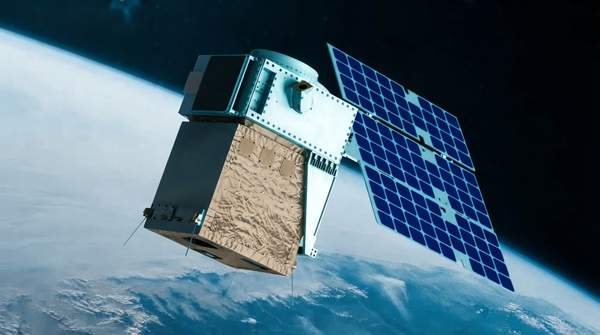
Futuristic quantum computer core being optimized by AI algorithms, symbolizing accelerated development in quantum machine learning applications.

NVIDIA's new Ising AI models can slash quantum processor setup times from days to mere hours, altering the pace of quantum development. The dramatic reduction in setup times allows researchers and developers to iterate on quantum experiments faster, accelerating the discovery of practical quantum machine learning applications in AI for 2026. The shift from multi-day manual processes to automated, hour-long tasks marks a significant operational improvement for quantum computing systems globally.

Quantum computing faces immense challenges in error correction and calibration, but AI is now providing unprecedented solutions that dramatically improve its accuracy and speed. These inherent instabilities have historically limited the scalability and reliability of quantum systems, hindering their real-world utility and delaying widespread adoption across various industries.

As AI continues to unlock practical applications and overcome inherent limitations, quantum computing is poised to transition from a niche research area to a powerful, accessible tool for complex problem-solving much sooner than previously expected, driven by these targeted AI interventions.

Accelerating Quantum Development with AI

NVIDIA's Ising AI models, launched in 2026, represent a significant step in making quantum computing practical. These open-source AI models specifically target the complex processes of calibration and error correction, which have historically been major impediments to quantum system stability. By automating these workflows, Ising models reduce the time required to set up quantum processors from multiple days to just hours, according to The Quantum Insider. This operational efficiency is crucial for accelerating research and development in quantum machine learning applications in AI, allowing for more rapid experimentation and validation of quantum algorithms. The deep integration of AI directly addresses the most critical bottlenecks, transforming previously manual, time-intensive tasks into streamlined, automated functions. The advancement moves quantum computing from an isolated laboratory endeavor to a more accessible and iterative development cycle, directly impacting the speed at which quantum solutions can be deployed and refined. The ability to quickly calibrate and correct errors means that more complex quantum problems can be tackled with greater confidence and efficiency, paving the way for advanced AI integration in areas like drug discovery, material science, and financial modeling.

Quantifying the Quantum Leap with AI

The impact of AI on quantum computing's core performance metrics is measurable and substantial. New data highlights significant improvements in both the speed and accuracy of quantum error correction, a critical barrier for large-scale quantum systems.

  • 2.5x — faster quantum error correction decoding achieved by Ising models compared to pyMatching, according to The Quantum Insider (2026). The 2.5x faster quantum error correction decoding means quantum computations can proceed with fewer delays, which is vital for real-time applications and reducing the overall computational cost of running complex quantum circuits. The faster decoding allows for more operations within the limited coherence times of qubits.
  • 3x — more accurate quantum error correction decoding provided by Ising models compared to pyMatching, according to The Quantum Insider (2026). Enhanced accuracy directly translates to more reliable quantum results, making quantum algorithms trustworthy for sensitive tasks in fields such as drug discovery, materials science, and financial modeling. Higher accuracy also reduces the need for repeated computations to verify results.
  • 3x — potential improvement in accuracy for correcting mistakes during quantum system operation by a second Ising model compared to current industry standards, according to PYMNTS (2026). The 3x potential improvement in accuracy for correcting mistakes during quantum system operation is a pivotal step towards fault-tolerant quantum computing, allowing systems to maintain coherence for longer periods and execute more complex computations with higher integrity. This real-time correction minimizes the propagation of errors across quantum gates.

These dual improvements in speed and accuracy challenge the traditional trade-off between the two in complex computational systems. AI-driven solutions are simultaneously delivering both faster processing and significantly more precise error handling, a surprising finding that defies typical engineering compromises. The dual benefit of faster processing and more precise error handling accelerates the timeline for practical quantum machine learning applications in AI by making quantum systems more robust and efficient. The ability to simultaneously enhance both speed and reliability is a critical enabler for scaling quantum processors to tackle problems currently beyond classical computers, moving closer to commercially viable quantum solutions. The ability to simultaneously enhance both speed and reliability marks a departure from earlier quantum computing phases where researchers often had to prioritize either speed or accuracy, not both simultaneously.

The Architects of Hybrid Computing

Major technology companies are actively constructing comprehensive frameworks that integrate AI and quantum computing, signaling a mature approach to development. The table outlines key components and their developers, illustrating the collaborative effort to bridge classical and quantum computational paradigms, which is crucial for advancing quantum machine learning applications in AI.

ComponentDescriptionDeveloper
NVQLinkEnables quantum processors to work with AI supercomputersNVIDIA
CUDA-QOpen-source development platform for quantum systems and applicationsNVIDIA
Quantum Processors and ComputersCore quantum hardware systemsIBM

Attribution: Data compiled from Fool (2026).

NVIDIA's development of NVQLink allows quantum processors to interface seamlessly with AI supercomputers, creating hybrid computational environments essential for current quantum machine learning applications in AI. NVQLink acts as a high-speed communication bridge, enabling the rapid exchange of data and control signals between classical and quantum components. The integration of NVQLink facilitates complex workflows where classical AI handles data preprocessing, algorithmic optimization, and post-processing of quantum results, while quantum components manage computationally intensive subroutines that leverage superposition and entanglement. Furthermore, NVIDIA's CUDA-Q platform provides an open-source framework, fostering community development and broader access to quantum programming tools. CUDA-Q allows developers to write quantum programs that can run on various quantum hardware backends, emphasizing portability and ease of use. NVIDIA's open-source approach contrasts with IBM's focus on developing proprietary quantum processors and complete quantum computers, though IBM also provides its Qiskit software development kit. The combined efforts of these companies underscore a strategic recognition that quantum computing's utility hinges on its ability to integrate with existing high-performance computing and AI infrastructures, moving beyond isolated quantum research into a hybrid, AI-optimized development cycle. The combined efforts of these companies ensure that quantum advancements are not siloed but rather contribute directly to solving real-world computational challenges within existing technological frameworks.

AI's Multifaceted Role in Quantum Advancement

Beyond error correction and calibration, AI's versatility is proving crucial for accelerating quantum development across multiple fronts, from foundational research to practical hybrid implementations. Researchers are actively using AI to discover new quantum algorithms, a process traditionally reliant on human intuition and extensive theoretical exploration, according to SiliconANGLE. The application of AI to discover new quantum algorithms can significantly speed up the identification of novel computational approaches that leverage quantum phenomena more effectively for specific problems, such as optimization or simulation. AI models can analyze vast datasets of quantum states and interactions, identifying patterns that lead to more efficient or entirely new algorithmic structures, thereby expanding the toolkit for quantum machine learning applications in AI.

AI is also being deployed to optimize error correction in quantum systems, a task that remains computationally intensive even with dedicated quantum hardware. By applying machine learning techniques, AI models can learn optimal error decoding strategies from large datasets of quantum errors, leading to more efficient and robust correction protocols. The optimization of error correction extends beyond simple error identification, delving into predictive models that anticipate and mitigate errors before they fully manifest, enhancing the overall stability of quantum operations. For example, AI can dynamically adjust control pulses to counteract environmental noise, extending qubit coherence times and improving the fidelity of quantum gates. The intelligent management of quantum states is paramount. for achieving reliable computations on noisy intermediate-scale quantum (NISQ) devices.

Moreover, AI improves the efficiency of hybrid workflows that combine multiple computing paradigms, as noted by SiliconANGLE. In these hybrid systems, AI can intelligently distribute computational tasks between classical and quantum processors, optimizing resource allocation and minimizing latency. For example, a quantum machine learning application might use AI to prepare input data, a quantum processor to execute a specific algorithm like a variational quantum eigensolver, and then another AI model to interpret and refine the quantum output. This strategic orchestration by AI ensures that each component of a complex problem is handled by the most suitable computational paradigm, maximizing overall performance. The deep integration of AI tools and platforms signals a new development paradigm where quantum hardware advancements are inextricably linked with AI-driven software optimization, moving beyond isolated quantum research into a hybrid, AI-optimized development cycle for advanced quantum machine learning applications in AI. This synergy is accelerating the path to practical quantum computing by addressing both the hardware limitations and the software complexities simultaneously.

The Horizon: Scaling and Standardizing Quantum-AI

The true competitive battleground in quantum computing has shifted to AI-driven software for error correction and calibration, positioning companies like NVIDIA as indispensable infrastructure providers for the entire quantum computing domain.

  • Microsoft announced it had developed a quantum chip, the Majorana 1, capable of fitting 1 million qubits on a single chip, according to Fool. This hardware breakthrough signifies a major advance in raw qubit count, pushing the boundaries of physical quantum processor size.
  • The 2026 Global Quantum + AI Challenge is structured as a two-stage program: Phase I (Ideation) and II (PoC Sprint), according to The Quantum Insider. This challenge aims to foster innovation and accelerate the development of practical quantum-AI solutions through structured competition and collaboration.
  • QuAIL has developed instance test sets of variable size to provide targets for maturing quantum computational devices, according to NASA. These test sets are crucial for benchmarking and validating the performance and reliability of quantum hardware as it evolves.

While high-qubit chips like Microsoft's Majorana 1 capture headlines by demonstrating raw computational potential, their practical utility remains heavily dependent on sophisticated software solutions for managing inherent instability and error rates. The development of a 1-million-qubit chip is a significant hardware milestone, but without AI-driven error correction and calibration, such large-scale systems would be impractical to operate reliably. This tension highlights that raw qubit count breakthroughs, while impressive, do not single-handedly deliver practical quantum computing. The challenge is not merely creating more qubits but making them coherent and controllable over extended periods. Instead, the industry is pushing towards fostering innovation through structured challenges like the 2026 Global Quantum + AI Challenge, which aims to accelerate proof-of-concept development by encouraging novel applications of quantum machine learning in AI. Rigorous testing frameworks are also critical. NASA's QuAIL initiative, developing instance test sets of variable size and tunable hardness, underscores the need for standardized benchmarks to validate the performance of maturing quantum computational devices. These benchmarks allow for objective comparison and tracking of progress in quantum hardware and software. Companies failing to integrate AI into their quantum development pipelines are already years behind, as NVIDIA's Ising models have proven AI can slash quantum processor setup times from days to mere hours. This implies that the future of quantum machine learning applications in AI lies not just in building bigger quantum computers, but in making existing and future hardware reliably operable through intelligent software. The simultaneous 2.5x speed and 3x accuracy improvements in quantum error correction, driven by AI, signal that the long-standing barrier of quantum instability is collapsing, making the economic viability of quantum applications a near-term reality. This shift suggests that the focus is moving from theoretical potential to practical implementation through AI-powered solutions.

Actionable Insights for the Quantum Era

The convergence of AI and quantum computing is reshaping the trajectory of advanced computational technologies. Several key insights emerge from current developments:

  • Quantum machine learning applications in AI benefit significantly from automation, as NVIDIA's Ising models reduce quantum processor setup times from days to hours, accelerating experimental cycles and development timelines.
  • Standardized testing through initiatives like NASA's QuAIL, which develops instance test sets of tunable hardness, is essential for validating the performance and maturity of quantum computational devices across various hardware platforms.
  • Robust software development kits, such as IBM's Qiskit, claimed to be the most widely used for quantum computing, are critical for making quantum programming accessible to a broader developer community and fostering application growth beyond specialized research groups.
  • The simultaneous improvements in speed (2.5x) and accuracy (3x) for quantum error correction, driven by AI, directly address historical limitations, making quantum systems more reliable and scalable for real-world tasks in fields like medicine and finance.

These insights suggest that the future success of quantum computing hinges on integrated solutions that combine advanced hardware with intelligent AI-driven software. By 2026, NVIDIA's strategic focus on AI-powered infrastructure for error correction and calibration will likely solidify its position as a critical enabler for the entire quantum computing domain, influencing how quantum machine learning applications in AI develop and are deployed.