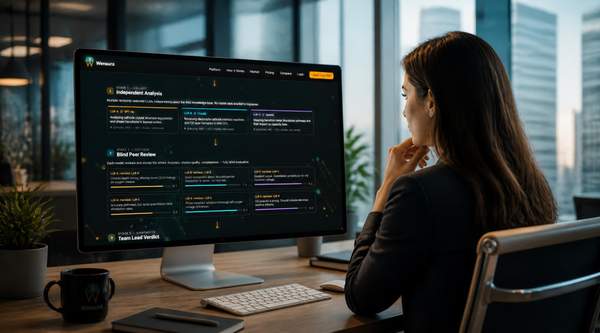
Even when producing identical, high-quality work, employees who leverage AI can be perceived as less capable than those who don't, revealing a subtle but significant bias emerging in the modern workplace. This capability bias, identified by Microsoft, can undermine professional recognition and career progression for AI users, creating an unseen hurdle. This erodes trust and equitable valuation of contributions, impacting workplace dynamics.
Generative AI is entering workplaces faster than most earlier technologies, notes Microsoft. However, global employee engagement declined for the second consecutive year in 2025, reaching its lowest level since 2020, reports Gallup. This tension between rapid technological adoption and deteriorating human experience creates a critical divergence for businesses in 2026.
Companies face a critical challenge: how to harness AI's transformative power without alienating their workforce or deepening existing inequalities. Human-centric AI strategies will be paramount for sustained success. The uneven integration of AI into the workplace paradoxically undermines global employee engagement and fosters a 'capability bias' that penalizes AI users, even as it drives concentrated economic growth.
The AI Influx and Engagement Paradox
- 38% — of employed respondents in one German survey reported using AI at work, according to Microsoft.
- Second consecutive year — global employee engagement declined in 2025, reaching its lowest level since 2020, according to Gallup.com.
- Fastest growth — in AI usage is occurring in low- and middle-income regions, even though high-income countries still lead overall, according to Microsoft.
While AI adoption rapidly expands globally, particularly in developing regions, this technological surge occurs against declining overall human engagement. The pursuit of efficiency through AI appears to compromise job satisfaction and workforce well-being. This simultaneous decline suggests a disconnect between technological progress and the human experience.