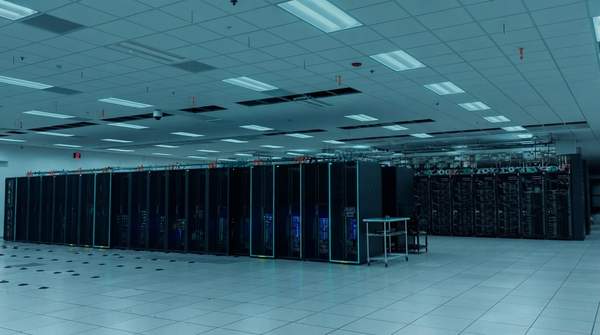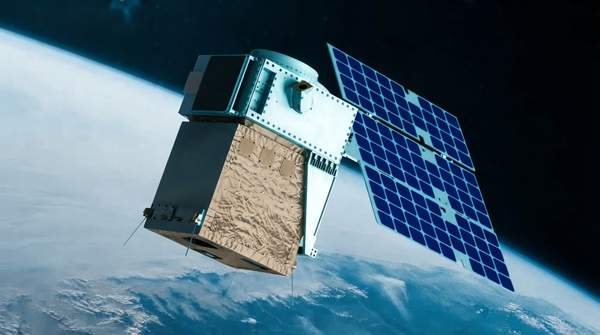
As the demand for AI and high-performance computing grows, a new frontier for data centers is opening up in low Earth orbit. Orbital computing moves data processing from terrestrial facilities into space, placing powerful servers aboard satellites. This approach aims to process vast amounts of data directly where it is collected, offering a solution to Earth-based constraints like power consumption and data transmission bottlenecks. By leveraging the unique advantages of space, such as abundant solar energy and global connectivity, this architecture is becoming a foundational layer for future digital infrastructure.
Orbital Computing Architecture: A Layered Model
Orbital computing functions as a cohesive system composed of distinct layers, each with a specific role in the data lifecycle. This architecture mirrors the logic of terrestrial edge computing by processing information as close to its source as possible, but does so at an altitude of hundreds of kilometers. The system deconstructs into four critical layers that manage data from initial acquisition to the final delivery of insights to users on the ground.
Data Source Layer
This initial layer consists of satellites equipped with sensors, such as high-resolution cameras or radio frequency detectors. These satellites are responsible for acquiring raw data from Earth and its surroundings. In a traditional model, this massive volume of raw data would need to be transmitted to a ground station, a process that consumes significant bandwidth and introduces delays. Orbital computing changes this by positioning the data source in close proximity to the processing hardware.
Processing Layer
At the heart of the architecture is the processing layer, which features satellites equipped with high-performance computing hardware like GPUs and other accelerators. These orbital data centers must be self-sustaining, operating in the vacuum of space without access to a power grid or conventional cooling systems. The electronics, including commercial hardware, are protected by specialized shielding and radiation-hardened components to withstand the constant bombardment of high-energy particles that would cause standard server chips to fail.
Communication Layer
To function at the scale required for large machine learning workloads, individual processing satellites must be interconnected. This is the role of the communication layer, which uses high-bandwidth, low-latency links to connect satellites within a constellation. According to analysis from Google researchers exploring scalable AI infrastructure in space, achieving performance comparable to terrestrial data centers requires inter-satellite connections that can support tens of terabits per second, a feat potentially achievable with advanced laser-based communication systems.
Downlink and Ground Layer
The final layer of the system is the interface with Earth. After data is processed in orbit, only the valuable results—such as decisions, alerts, or compact analytical outputs—are sent down to ground stations. This dramatically reduces the amount of bandwidth needed for the downlink, tightening the loop from observation to action. This layer ensures the processed insights are delivered to end-users and integrated with existing terrestrial networks.
Why Move Compute to Space? Drivers and Benefits
The primary motivation for moving data centers into orbit is to overcome the physical and logistical limits of their terrestrial counterparts. For certain workloads, low Earth orbit provides a compelling environment that bypasses bottlenecks in power, cooling, and data transmission. One of the most significant benefits is the reduction in latency for time-sensitive applications. By processing data in orbit, the system can deliver insights for disaster response or autonomous systems much faster than if raw data had to be sent to Earth first.
Furthermore, space offers access to abundant and continuous solar power, which can help shift compute workloads away from the energy-intensive grids on Earth. The vacuum of space also provides a passive cooling environment. These factors, combined with the ability to create a geopolitically resilient and sovereign infrastructure independent of terrestrial constraints, make orbital computing an attractive option for both governments and commercial enterprises.
Overcoming Technical Hurdles
Despite its advantages, building and operating data centers in space presents formidable engineering challenges. Every system must be designed to survive the harsh cosmic conditions, including intense radiation and the absence of a municipal power grid. The hardware must be ruggedized and power-efficient to function reliably. According to a white paper on the topic, while the key technologies needed for scalable orbital computing exist, their implementation requires innovative solutions for power management and thermal control within the satellite architecture.
As AI infrastructure collides with physical limits on Earth—measured in megawatts, thermal capacity, and water availability—orbital systems face their own unique constraints. Distributing power across large, modular satellite structures and dissipating the heat generated by high-performance processors in a vacuum are critical problems that must be solved for these systems to become a viable, large-scale alternative to ground-based data centers.
Key Applications of Orbital Computing
Orbital computing is particularly well-suited for applications that generate massive amounts of data in space, where immediate processing provides a distinct advantage. Earth observation is a primary use case, where satellites capture vast streams of imagery and sensor data. Processing this information in orbit allows for the rapid identification of changes or events on the ground, with only the relevant alerts and analyses being sent back to Earth.
The technology also supports the creation of resilient infrastructure for governments and enterprises seeking data processing capabilities that are independent of terrestrial networks. This is crucial for national security and for ensuring data sovereignty. Additionally, orbital data centers can serve as virtual cloud nodes, transforming satellites into an extension of the cloud and enabling new classes of space-enabled applications for both commercial and scientific purposes.
The Future Trajectory of Orbital Computing
Organizations should evaluate orbital computing for applications requiring low-latency edge AI, resilient data processing, and access to continuous solar power, particularly in Earth observation and defense sectors. With ongoing advancements in launch capability, spacecraft autonomy, and modular design, orbital data centers have the potential to become a foundational component of global digital infrastructure. The continued development of this technology promises to support advanced AI services and unlock entirely new applications driven by space-based data. The key indicator of progress will be the successful deployment and operational validation of new orbital data center constellations and the expansion of in-orbit processing capabilities for diverse AI workloads.