A new AI model from UCSF researchers predicts Alzheimer's disease progression and future cognitive scores with high accuracy. It uses only a single baseline MRI scan and basic demographic data. This system segments brain MRI, predicts diagnosis, and estimates current and future cognitive scores, according to Nature.
Traditionally, accurate Alzheimer's diagnosis and progression prediction demanded expensive, invasive tests like PET scans, genetic analysis, and fluid proteomics. Now, a new AI framework achieves superior results from a single, standard MRI, significantly reducing patient burden.
This development shifts Alzheimer's diagnostics towards more accessible, less invasive, and earlier detection. The UCSF model's ability to predict future cognitive scores from a single baseline MRI enables healthcare systems to move from reactive symptom management to proactive intervention years in advance, potentially altering disease trajectories for millions.
What We Know About AI and Alzheimer's
UCSF researchers developed a deep learning, multitask framework for early Alzheimer's detection. This AI model predicts cognitive scores using only a baseline MRI and demographic data, according to Newswise. The framework segments brain MRI, predicts diagnosis, and estimates current and future cognitive scores from a single 3D MRI scan, as reported by Nature. Crucially, this multitask deep learning framework outperformed all existing AI methods, including standard transfer learning, setting a new benchmark for diagnostic precision.
How AI Outperforms Traditional Diagnostics
The UCSF framework employs a multitask deep learning strategy, combining specialized domain knowledge, custom-built models, and large pretrained models. This approach predicts cognitive scores using only a baseline MRI and demographics, according to Medical Xpress. It outperformed all existing AI methods in predicting Alzheimer's diagnosis, tissue segmentation, and both current and future cognitive scores from a single baseline scan.
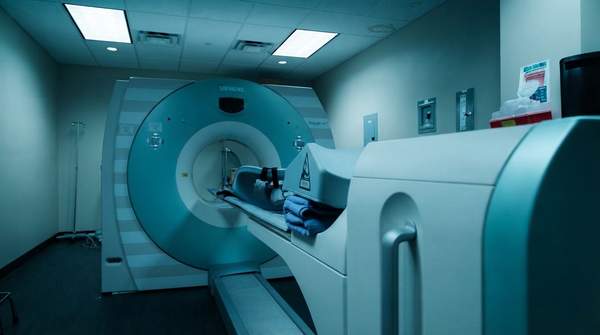
Crucially, this model bypasses the need for baseline cognitive assessment, specialized image pipelines, expensive PET scans, genetic analysis, or fluid proteomics, Medical Xpress reports. Unlike other AI systems, such as a Worcester Polytechnic Institute team's AI with 93% accuracy for brain scan analysis (WSB-TV), the UCSF model offers broader scope and superior performance against existing benchmarks. The UCSF model's broader scope and superior performance against existing benchmarks indicates a more comprehensive diagnostic capability.
The UCSF framework's innovative multi-task architecture and superior performance, achieved without costly or invasive procedures, fundamentally advances Alzheimer's diagnostics. By eliminating the need for expensive PET scans, genetic analysis, or fluid proteomics, this AI could drastically cut healthcare costs, making early detection a standard rather than a luxury.
Advancements in Alzheimer's Prediction
The UCSF framework's ability to predict future cognitive scores and disease progression from a single baseline MRI, without prior cognitive assessment, enables a shift from reactive diagnosis to proactive intervention. This allows for potential treatment initiation years before clinical symptoms manifest. By outperforming existing AI and eliminating expensive tests, UCSF's framework provides a cost-effective, accessible alternative. This could rapidly scale global diagnostic capabilities, particularly in underserved regions. The sophisticated, multi-pronged AI approach, combining specialized domain knowledge with custom and pretrained models, demonstrates that complex medical predictions demand more than 'off-the-shelf' AI solutions. This innovation sets a new, higher bar for diagnostic precision and accessibility, potentially accelerating the development of new therapeutics and clinical trials.
If validated in broader clinical settings, this UCSF AI framework appears likely to redefine Alzheimer's diagnostics, making early, non-invasive prediction a global standard and fundamentally reshaping patient care and therapeutic development.