Future Trends

AI Retail Tech Trends Show Unprecedented Growth

Even as one-third of e-commerce companies prepare for autonomous AI agents to manage shopping journeys, physical stores still account for approximately 80% of all retail sales, according to...

OH
Omar Haddad

April 10, 2026 · 5 min read

Futuristic retail store with holographic AI interfaces assisting customers and staff, showcasing the blend of digital technology and physical shopping.

Even as one-third of e-commerce companies prepare for autonomous AI agents to manage shopping journeys, physical stores still account for approximately 80% of all retail sales, according to emarketer. This enduring dominance of tangible retail creates a complex challenge for the rapidly evolving AI landscape. Consumers frequent brick-and-mortar locations, presenting a significant opportunity for technology to enhance real-world interactions.

Nearly 90% of retailers actively use AI to transform operations, according to ringly. Yet, the vast majority of retail sales still occur in physical stores. This demands AI solutions that bridge digital and tangible, not just online environments. The tension: deploy advanced AI where consumer spending concentrates.

Companies mastering AI integration within their physical retail footprint will gain a significant competitive advantage. Those focused solely on digital AI risk missing the largest market opportunity. Strategic AI allocation to optimize every physical touchpoint will define the next wave of retail success.

AI's Unprecedented Growth and Adoption

The global AI in retail market reached $18.4 billion in 2026, according to ringly. The market reaching $18.4 billion in 2026 signals a major investment trend. The market is projected to reach $130.88 billion by 2033, a seven-fold expansion over seven years. The market's projected growth to $130.88 billion by 2033, a seven-fold expansion over seven years, confirms sustained confidence in AI's capacity to drive efficiency and innovation. Currently, 89% of retail and consumer packaged goods (CPG) companies actively use or test AI applications, according to ringly. AI adoption in retail marketing reached 92% of marketers in 2025, according to SQ Magazine. The widespread integration of AI, with 89% of retail and CPG companies using or testing applications and 92% of marketers adopting it, means AI is no longer an emerging technology but a core component of retail strategy across all segments, poised to permeate every facet from logistics to customer engagement.

AI's Dual Front: Enhancing Physical and Digital Journeys

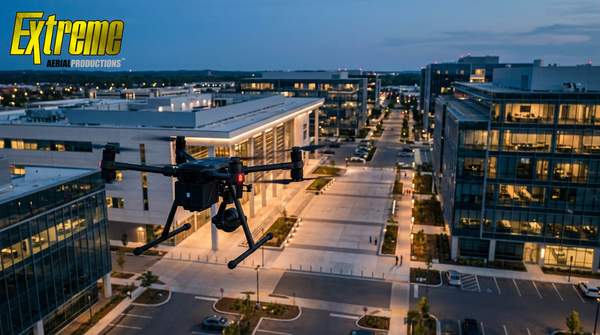
AI applications in retail span the entire customer journey, from pre-store arrival to digital commerce. Before customers even enter a store, cameras in parking lots track space usage and car duration, according to ServeTheHome. Cameras in parking lots tracking space usage and car duration optimize infrastructure and highlight AI's role in enhancing the physical environment. Retailers also use AI for traffic analytics to monitor storefront traffic and conversion rates, with compute infrastructure typically running on in-store CPUs, according to ServeTheHome. AI for traffic analytics monitoring storefront traffic and conversion rates provides real-time insights into customer behavior within physical spaces, enabling immediate operational adjustments.

In contrast, Walmart partners with OpenAI to sell products directly in ChatGPT with instant checkout capabilities, according to emarketer. Walmart's partnership with OpenAI to sell products directly in ChatGPT with instant checkout capabilities illustrates AI's application in seamless conversational commerce, extending the retail footprint into digital assistants. The implication is clear: AI's versatility demands a strategy that optimizes both physical and digital touchpoints, recognizing that the largest market opportunity still resides in tangible interactions.

AI Application AreaSpecific Use CaseImpact
Physical Store OperationsParking lot cameras track space usage and car durationOptimizes parking availability and customer flow before store entry
In-Store AnalyticsTraffic analytics monitors storefront traffic and conversion rates (on in-store CPUs)Provides real-time insights into customer behavior and optimizes store layout
Digital CommerceWalmart partners with OpenAI for direct sales in ChatGPT with instant checkoutExtends purchasing options into conversational AI platforms, enhancing digital convenience

Footnote: Data compiled from ServeTheHome and emarketer, reflecting AI deployments in 2026.

The Strategic Imperative: Experience-Driven Growth

New Balance experienced 180% growth over the last five years by focusing on premium positioning, limiting discounts, and opening 80 new stores in 2025, according to Quad/Graphics. New Balance's 180% growth over the last five years, achieved by focusing on premium positioning, limiting discounts, and opening 80 new stores in 2025, demonstrates the enduring power of a strong physical presence combined with strategic brand management. Ulta Beauty conducts 20,000 in-store events annually, according to emarketer, creating highly engaging physical experiences. Ulta Beauty's 20,000 annual in-store events, creating highly engaging physical experiences, strengthen customer bonds in tangible settings.

Simultaneously, one-third of e-commerce companies prepare for autonomous AI agents to manage shopping journeys, according to SQ Magazine. These agents aim to personalize online experiences. The combined success of physical store growth and in-store events alongside e-commerce companies preparing for autonomous AI agents demonstrates future growth lies in a sophisticated blend of digital and physical engagement. The strategic imperative for retailers is to integrate AI as a foundational element for optimizing and enriching the physical shopping experience, not merely a digital enhancement. The implication: AI's most impactful role isn't replacing human interaction but enhancing it, turning physical locations into indispensable, data-driven experience hubs that pure e-commerce cannot replicate.

Forecasting Retail's AI-Driven Future

Retailers pouring AI investments solely into e-commerce fundamentally misallocate resources, overlooking the dominant revenue channel where AI could deliver immediate, tangible returns. Physical stores account for approximately 80% of all retail sales, according to emarketer. Physical stores' dominance, accounting for approximately 80% of all retail sales, means an exclusive focus on digital AI applications neglects the majority of consumer spending. Strategic AI deployment in physical stores—from inventory management to personalized in-store recommendations—offers a direct path to boosting the primary revenue stream. An imbalance in resource allocation, favoring e-commerce AI without commensurate physical store investment, risks hindering overall growth.

The stark contrast between one-third of e-commerce companies preparing for autonomous AI agents and AI's current deployment in physical store parking lots reveals a critical strategic blind spot: the real competitive battleground for retail's future isn't in digital abstraction, but in hyper-optimizing every physical touchpoint with AI. One-third of e-commerce companies prepare for autonomous AI agents to manage shopping journeys, according to SQ Magazine. Yet, AI applications in retail include cameras in parking lots tracking space usage, according to ServeTheHome. While advanced AI agents promise sophisticated digital experiences, foundational AI applications like parking lot management demonstrate practical, immediate impact on physical operations. This disparity highlights a misdirection of innovative effort. The true competitive edge comes from retailers who understand AI's power lies in enhancing the entire customer journey, starting from the moment a customer considers visiting a physical store, rather than solely perfecting the online checkout process.

With New Balance's 180% growth tied to physical store expansion and Ulta Beauty hosting 20,000 in-store events annually, AI's most impactful role isn't replacing human interaction but enhancing it, turning physical locations into indispensable, data-driven experience hubs that pure e-commerce cannot replicate. New Balance experienced 180% growth over the last five years, opening 80 new stores in 2025, according to Quad/Graphics. Ulta Beauty conducts 20,000 in-store events annually, according to emarketer. Physical retail, strategically enhanced, offers unique value propositions digital-only channels cannot match. AI provides the necessary data infrastructure to optimize these real-world interactions, allowing retailers to personalize experiences, manage events efficiently, and understand customer traffic patterns. Retail success hinges on AI transforming physical stores into dynamic, engaging destinations, rather than reducing human engagement.

By Q4 2026, retailers like New Balance, with its continued physical store expansion plans, will likely solidify their market position by demonstrating how AI can underpin and amplify the value of tangible retail experiences, outperforming competitors focused solely on digital channels.