What is Quantum Machine Learning and Why Does It Face Challenges?

A foundational tutorial on quantum machine learning was formally submitted in early 2025, even as the field explores ambitious applications like drug discovery and fraud detection.

OH
Omar Haddad

April 13, 2026 · 3 min read

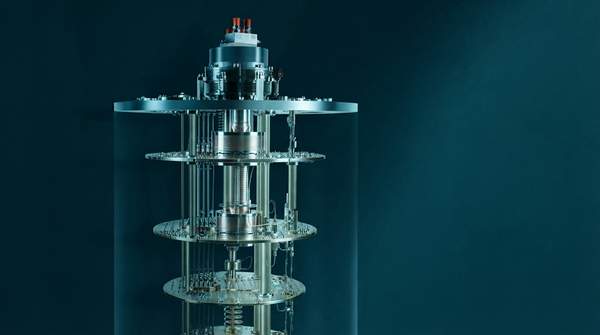
Abstract visualization of quantum bits and AI neural networks merging, representing the complex and promising field of quantum machine learning.

A foundational tutorial on quantum machine learning was formally submitted in early 2025, even as the field explores ambitious applications like drug discovery and fraud detection. The rapid progression from foundational tutorials to critical applications highlights the intense interest in QML's potential to reshape key industries.

Quantum Machine Learning holds the promise of accelerating data analysis and revolutionizing industries, but significant challenges in model trainability and foundational understanding persist. The ambitious exploration of its capabilities often outpaces the development of its underlying theoretical and practical frameworks.

While quantum machine learning's long-term impact appears transformative, its near-term progress will likely be characterized by incremental breakthroughs in overcoming fundamental technical hurdles rather than immediate, broad commercial deployment.

The Rapid Ascent of Quantum Machine Learning

The formal submission of a foundational QML tutorial on Mon, 3 Feb 2025, according to arxiv, provides a critical benchmark for the field. Yet, IBM Research already discusses QML's potential for drug discovery and fraud detection. The rapid leap from basic instruction to advanced application signifies an urgent, almost premature, push for commercial viability, often outpacing the underlying theoretical maturity.

What is Quantum Machine Learning?

Quantum machine learning integrates quantum mechanics into algorithms, aiming to process data in fundamentally new ways. The foundational theory of quantum computing, crucial for QML, is detailed in Section 2 of an MDPI paper. Concurrently, Springer Nature reports ongoing efforts to classify QML algorithms. This classification is vital; it helps define the diverse approaches, from quantum-enhanced classical models to fully quantum systems. The field's inherent complexity demands a unified understanding of both quantum physics and machine learning, suggesting that interdisciplinary expertise will be paramount for any significant breakthrough.

Current Research and Practical Implementations

IBM Research confirms active collaboration with ETH Zurich on quantum machine learning initiatives. The collaboration signifies substantial institutional investment in quantum algorithms for machine learning. The partnerships are crucial; they move the field beyond theoretical constructs, demonstrating that practical QML advancement hinges on robust, inter-organizational research efforts.

The Hurdles: Why QML Isn't Mainstream Yet

Challenges in training quantum machine learning models persist, as an arxiv publication details. The difficulty arises from quantum systems' inherent complexity and the specialized optimization techniques required. Effective model training demands significant computational resources and novel algorithmic approaches. The bottleneck severely limits QML's practical implementation, confining it largely to specialized research rather than broad commercial deployment.

Unlocking New Frontiers: The Promise of Quantum Advantage

QML holds the potential to accelerate data analysis, especially for quantum data, according to an arxiv paper. QML's revolutionary impact might be specialized, not general-purpose. Its true value lies in processing complex datasets from quantum simulations or experiments with unprecedented speed, unlocking insights currently beyond classical methods in fields like quantum chemistry or materials science.

Getting Started: Practical Learning in QML

What are practical ways to engage with quantum machine learning?

Practical code demonstrations, as detailed by arxiv, offer hands-on learning. These often leverage open-source frameworks like Qiskit or Cirq, enabling experimentation with quantum circuits. The tools provide a direct path from theory to application, deepening understanding of QML operations.

What is "quantum data" in the context of QML?

Quantum data originates from quantum systems, encompassing qubit states, quantum field theory simulations, or molecular structures. The data features complex correlations and entanglement, challenging classical processing. QML algorithms are designed to natively handle these properties, potentially extracting insights classical models cannot.

How does quantum computing improve machine learning?

Quantum computing enhances machine learning through novel computational primitives like superposition and entanglement. The primitives enable algorithms to explore vast solution spaces more efficiently and identify complex data correlations. Quantum annealing, for instance, can optimize specific problems faster than classical methods, benefiting tasks like feature selection or clustering.

The Road Ahead for Quantum Machine Learning

The long-term vision for QML targets 'quantum advantage,' where quantum algorithms demonstrably outperform classical ones for specific, complex problems. An arxiv publication highlights these opportunities, particularly for quantum data or high-dimensional optimization. Realizing this potential demands sustained investment in foundational research and hardware. By 2028, leading providers like IBM and Google will likely prioritize improving qubit stability and coherence times, essential for the complex quantum circuits advanced QML models require.