What Are Quantum-Safe Cryptography Principles for Digital Assets?

On August 13, 2024, the U.

AM
Arjun Mehta

April 20, 2026 · 5 min read

Futuristic cityscape with glowing code and quantum patterns, illustrating secure digital assets protected by advanced cryptography against quantum threats.

On August 13, 2024, the U.S. government officially declared the end of an era for digital security, finalizing the first set of encryption algorithms designed to withstand attacks from quantum computers. This decision by the National Institute of Standards and Technology (NIST) establishes new global benchmarks for securing sensitive data and digital assets.

Digital assets currently rely on robust cryptographic standards, but the imminent threat of quantum computing necessitates an immediate, proactive shift to quantum-safe protocols. Quantum machines' ability to rapidly solve these mathematical problems is no longer theoretical, creating a fundamental vulnerability.

Organizations failing to prioritize and execute a timely transition to these new standards risk catastrophic data breaches and loss of trust. This shift demands extensive planning and resource allocation, for which many entities are unprepared. The window for proactive migration is closing.

NIST's August 13, 2024, release of the final Post Quantum Crypto Standards provides a clear directive for global cybersecurity (SSH). This finalization, delivered as Federal Information Processing Standards (FIPS), establishes an urgent requirement for organizations to begin transitioning to quantum-safe encryption (CSRC NIST). The preparatory phase is over. Organizations must now move from planning to active implementation, integrating these new protocols across diverse digital infrastructures (NIST). This transition is not merely an IT upgrade; it is a fundamental shift in how digital security is conceived and implemented, affecting every layer of an organization's digital presence.

The Looming Quantum Threat

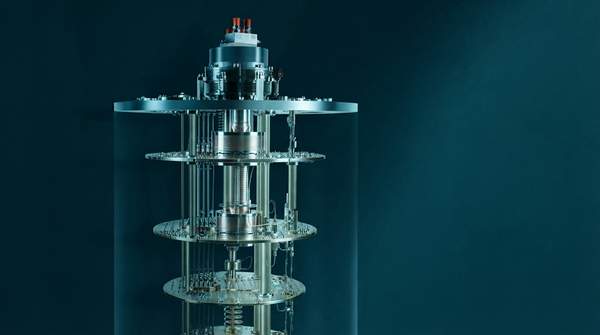
Future quantum computers may break elliptic curve cryptography with fewer than 1,200 logical qubits and 90 million Toffoli gates, or fewer than 1,450 logical qubits and 70 million Toffoli gates (PMC.NCBI.NLM.NIH.gov). These circuits could execute on a superconducting qubit CRQC with under 500,000 physical qubits in minutes. An approximately 20-fold reduction in physical qubits is needed to solve the ECDLP-256 problem, a common encryption standard. NIST's August 2024 finalization of post-quantum standards treats this "may" as an imminent certainty, demanding immediate, proactive security. The 20-fold reduction in qubit requirements shifts the quantum threat from theoretical to a practical, near-term risk, compelling decisive organizational action.

NIST's Rigorous Standardization Journey

NIST assessed 82 algorithms from 25 countries for its Post-Quantum Cryptography (PQC) standardization project (NIST). This extensive, multi-year evaluation involved multiple rounds of public scrutiny and cryptographic analysis by global experts. The process aimed to identify algorithms resistant to current and anticipated quantum attacks, while remaining practical for real-world deployment. This thorough, internationally collaborative vetting provides critical confidence in the security and longevity of the chosen cryptographic schemes, justifying their immediate, widespread adoption despite implementation complexities.

Introducing the New FIPS Standards

NIST released final versions of the first three Post Quantum Crypto Standards: FIPS 203, FIPS 204, and FIPS 205 (SSH). These FIPS standards provide the official framework for implementing quantum-safe cryptography. FIPS 203 specifies the Module-Lattice-based Key-Encapsulation Mechanism (ML-KEM) for secure key exchange. FIPS 204 outlines the Module-Lattice-based Digital Signature Algorithm (ML-DSA) for verifying digital identities and ensuring data integrity. FIPS 205 details the Stateful Hash-based Digital Signature Algorithm (SLH-DSA), offering another robust digital signature option. The formal publication eliminates ambiguity, providing clear implementation guidelines. Organizations still relying on pre-quantum cryptography now operate with a rapidly expiring security shelf-life; every day of inaction increases risk to digital assets. This immediate obsolescence mandates a rapid, comprehensive review of all existing cryptographic deployments.

The Core of Quantum-Safe Protection

The principal Post-Quantum Cryptography (PQC) standards specify key establishment and digital signature schemes (CSRC NIST). Key establishment protocols secure secret key agreement over insecure channels, fundamental for encrypted communications and protecting digital assets. Digital signature schemes provide authenticity and integrity, verifying sender identity and data non-tampering. These foundational schemes are critical for securing everything from communications to transactions. Without robust key establishment, data confidentiality is compromised; without secure digital signatures, trust in digital interactions erodes. The shift to quantum-safe alternatives for these core functions is essential for maintaining digital information integrity and privacy. NIST has released three implementable post-quantum cryptography standards (NIST). The burden has shifted from waiting for guidance to actively executing complex, organization-wide cryptographic transitions, a task for which most are ill-prepared. Understanding the nuances of these new standards and their implications for existing systems is the next critical step.

Addressing Implementation Readiness

What is quantum-safe cryptography?

Quantum-safe cryptography refers to algorithms designed to resist attacks from both classical and quantum computers. These protect digital assets and data in a future where large-scale quantum computers can break current public-key schemes like RSA and elliptic curve cryptography.

Why is quantum cryptography important for digital assets?

Quantum cryptography is vital for digital assets because current encryption methods, securing everything from financial transactions to personal data, are vulnerable to quantum attacks. Without migration, confidentiality, integrity, and authenticity of digital assets could be compromised, leading to widespread data breaches and economic disruption.

How does quantum computing affect cryptography?

Quantum computing affects cryptography primarily through algorithms like Shor's, which efficiently factors large numbers and solves discrete logarithm problems, and Grover's, which speeds up brute-force searches. These directly threaten widely used public-key cryptography (RSA, ECC) and can reduce symmetric-key cryptography's effective key length, necessitating new, quantum-resistant approaches.

What are the main types of quantum-safe cryptography?

Main types include lattice-based, hash-based, code-based, and multivariate polynomial cryptography. NIST's initial selection focuses on lattice-based schemes (ML-KEM, ML-DSA) and hash-based signatures (SLH-DSA) due to their security properties and practical implementation characteristics.

The Path Forward: Key Algorithms for Deployment

ML-DSA, SLH-DSA, and ML-KEM will form the foundation for most post-quantum cryptography deployments (CSRC NIST). These algorithms are the bedrock for securing digital assets in the quantum era. ML-KEM, a lattice-based key-encapsulation mechanism, provides secure key exchange. ML-DSA, a lattice-based digital signature algorithm, offers robust digital authentication. SLH-DSA, a hash-based digital signature algorithm, provides an additional secure signature option for long-term validity. Organizations must integrate these schemes into existing security architectures, from hardware to software and network protocols, requiring a comprehensive inventory of cryptographic dependencies. This integration demands technical expertise and strategic planning to minimize disruption. By the end of 2026, companies not initiating pilot programs or transition planning for ML-KEM or ML-DSA will likely face significant compliance and security vulnerabilities, exposing digital assets to advanced threats and impacting market position.