Quantum AI: Exploring Its Predictive Potential and Hurdles

Researchers successfully applied Quantum Boltzmann Machines (QBMs) to analyze particle jet data, identifying patterns that classical models completely missed.

AM
Arjun Mehta

April 23, 2026 · 5 min read

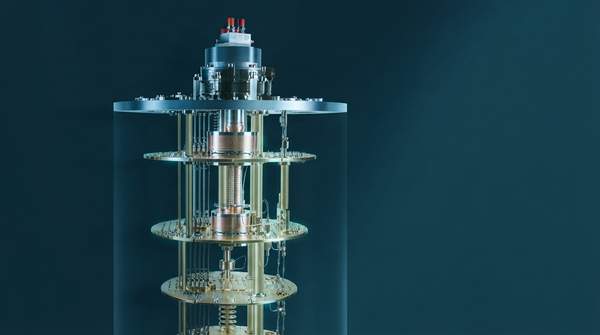
Abstract representation of quantum AI, showcasing interconnected glowing qubits and neural network pathways, symbolizing advanced computation and pattern recognition.

Researchers successfully applied Quantum Boltzmann Machines (QBMs) to analyze particle jet data, identifying patterns that classical models completely missed. The application of Quantum Boltzmann Machines (QBMs) in high-energy physics offers a new lens for understanding fundamental interactions, potentially accelerating discoveries in fields like particle detection and material science.

Quantum AI models are demonstrating superior pattern recognition and computational efficiency. However, their unique learning mechanisms challenge traditional AI understanding and face significant hardware and algorithmic limitations.

While quantum AI promises to unlock new predictive capabilities for complex datasets, its widespread adoption and reliable generalization will depend on overcoming deep theoretical and practical hurdles that are still poorly understood.

In a significant development, Quantum Boltzmann Machines (QBMs) demonstrated their ability to analyze intricate particle jet data, discerning patterns that remained invisible to even advanced classical AI models, according to The Quantum Insider. QBMs' ability to analyze intricate particle jet data illustrates quantum computing's unique capacity to uncover complex, hidden structures within high-dimensional, noisy datasets. The identification of these previously overlooked patterns could accelerate the understanding of subatomic interactions, potentially leading to new insights into the fundamental building blocks of the universe.

Quantum Boltzmann Machines: A New Class of Predictors

Quantum Boltzmann Machines can effectively learn high-dimensional distributions, a capability validated across both synthetic and real-world datasets, as reported by The Quantum Insider. These models leverage quantum mechanical principles, such as superposition and entanglement, to process information in ways classical computers cannot. Encoding data into quantum states allowed QBMs to identify patterns overlooked by classical Boltzmann models with greater computational efficiency.

Furthermore, QBMs can be trained sample efficiently, and this sample complexity can be reduced through pre-training strategies, according to Nature. QBMs' sample efficiency stems from their ability to explore vast solution spaces simultaneously, a characteristic of quantum computation. By processing information in quantum superposition, QBMs can represent and analyze complex correlations within data more effectively than their classical counterparts, offering a powerful and efficient approach to learning from high-dimensional data.
The Paradox of Quantum Learning: Power vs. Generalization

State-of-the-art quantum neural networks can accurately fit random states and random labeling of training data, a finding reported by PMC. The capacity of state-of-the-art quantum neural networks to accurately fit random states and random labeling of training data challenges current notions of small generalization error, which typically assumes that memorizing random data leads to poor performance on unseen data. Quantum neural networks possess the capacity to memorize random data, suggesting their 'intelligence' operates on a fundamentally different principle than classical AI.

Traditional approaches to understanding generalization fail to explain the behavior of quantum machine learning models, according to PMC. The failure of traditional approaches to explain quantum machine learning models means that while QBMs demonstrate superior pattern recognition in complex scenarios, their learning mechanism might not conform to classical definitions of robustness. The PMC findings suggest that traditional metrics for AI model robustness and generalization are fundamentally broken for quantum systems, forcing a critical re-evaluation of how we validate and trust these powerful new models. This implies that what classical AI considers overfitting might be a feature for specific, highly complex, and noisy datasets, rather than a failure. For more, see our What Quantum Machine Learning and.

Hardware and Algorithmic Hurdles on the Path to Quantum Advantage

The connectivity graph of a quantum computing platform can restrict the unitary gates that can be implemented, according to Arxiv. The restriction of unitary gates by the connectivity graph of a quantum computing platform means that the theoretical advantages of quantum algorithms, including QBMs, cannot always be fully realized on existing quantum devices. These architectural constraints can limit the complexity of quantum circuits and the types of quantum states that can be prepared, impacting model performance.

Strategies designed to circumvent the barren plateau problem in variational quantum computing might also hinder potential quantum advantages, Nature reports. Barren plateaus refer to optimization landscapes where gradients vanish exponentially with the number of qubits, making training difficult. While methods exist to mitigate this, they can inadvertently reduce the expressivity of quantum models, thus limiting their unique capabilities. The tension between QBMs' demonstrated efficiency and these hardware and algorithmic limitations implies that the quantum computing industry faces a critical choice: optimize for broad applicability and risk diluting quantum advantage, or focus on specialized, constrained architectures that fully leverage QBMs' unique strengths for specific, high-impact problems.

Beyond the Lab: Real-World Impact and Future Predictions

Companies investing in Quantum Boltzmann Machines for highly complex, niche pattern recognition tasks, like particle physics, are betting on a new paradigm of 'learning' that defies classical AI's generalization rules, based on evidence from The Quantum Insider. Investing in Quantum Boltzmann Machines for highly complex, niche pattern recognition tasks could unlock insights previously impossible in areas such as drug discovery, materials science, and financial modeling, where datasets are often high-dimensional and noisy. For instance, in finance, QBMs could identify subtle market anomalies or complex risk patterns that classical models overlook, offering a competitive edge.

The unique pattern-finding abilities of QBMs, despite their challenges, promise to revolutionize various industries by enabling predictions currently beyond our reach. Industries dealing with high-dimensional, complex data stand to gain significantly. However, this deployment represents a high-risk, high-reward gamble, as the long-term robustness and generalizability of these models in dynamic, real-world environments are still under investigation. The integration of quantum computing with AI for predictions in 2026 will likely focus on these specialized applications, where the potential gains justify the inherent theoretical and practical uncertainties.

Your Quantum AI Questions Answered

What are the benefits of quantum AI?

Quantum AI offers benefits such as enhanced computational speed for specific problems and the ability to model complex quantum systems directly. For instance, quantum annealing, a type of quantum computation, shows promise for solving optimization problems like those found in logistics or drug design faster than classical methods.

How does quantum computing enhance AI?

Quantum computing enhances AI by allowing data to be processed in superposition and entanglement, enabling the exploration of many possibilities simultaneously. This can lead to more efficient algorithms for tasks like pattern recognition and classification, potentially speeding up training or uncovering deeper correlations in data that classical systems miss.

What are the challenges of quantum AI integration?

Integrating quantum AI faces challenges including the need for robust quantum error correction, which is still in early stages of development. Additionally, maintaining qubit stability, scaling quantum processors, and addressing the scarcity of skilled quantum programming talent are significant hurdles for widespread adoption.

The Quantum Leap in Prediction: A Double-Edged Sword

Quantum Boltzmann Machines represent a powerful frontier in predictive analytics, offering unparalleled pattern recognition for complex, noisy datasets. Their unique capacity to 'memorize' random data, while challenging traditional AI generalization theories, positions them as a high-risk, high-reward gamble for niche applications rather than a general AI solution. The unique capacity of Quantum Boltzmann Machines to 'memorize' random data means that traditional AI models and practitioners may struggle to keep pace with the complexity and efficiency of quantum-enhanced solutions, particularly for highly specific problems.

The integration of quantum computing with AI for predictions in 2026 demands careful navigation of its immense potential and profound challenges. By 2027, the deployment of specialized quantum processors by major players like IBM and Google will likely target specific industry needs, focusing on QBMs for complex molecular simulations and financial modeling rather than general AI tasks.