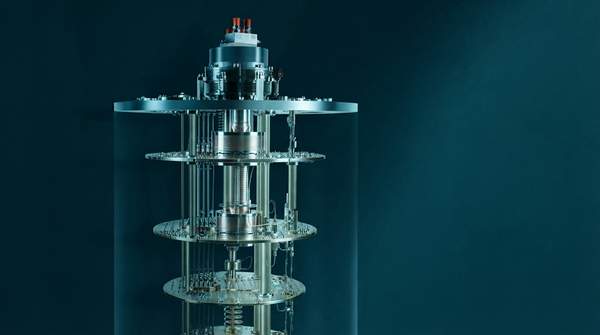
Horizon Quantum Computing, listed on Nasdaq in March 2026, has committed to purchasing IonQ's cutting-edge 256-qubit trapped-ion quantum computing system – the first announced sale of its kind. This acquisition positions Horizon to secure advanced hardware for its operations, signaling an immediate push for technological leadership.
Horizon Quantum, a relatively new public entity, is making highly mature and aggressive strategic moves in a nascent technology market. This creates a clear tension between its recent public debut and its bold, established-player strategy.
Such rapid consolidation and specialization in specific quantum modalities suggest a faster-than-expected maturation of the quantum computing industry's competitive landscape, where early hardware access could define market positions.
Deep Dive: Horizon's Software-Hardware Integration
Horizon Quantum has integrated its Triple Alpha development environment with AQT's trapped-ion quantum processors, forging a direct software-hardware connection (The Quantum Insider, HPCwire). This deep integration establishes a seamless development-to-execution pipeline, directly accelerating the practical application of quantum algorithms on trapped-ion systems. Optimizing the entire quantum computing stack, from high-level programming to low-level hardware execution, is a strategic focus and a critical step for real-world quantum utility.
IonQ's Next-Gen System: A Market First
Horizon Quantum Holdings acquired IonQ's 6th-generation system, featuring 256 qubits (Quantum Computing Report). This marks the inaugural announced sale of IonQ's chip-based 6th generation system (Simply Wall Street).

Horizon Quantum's immediate post-IPO acquisition of this 256-qubit system is a high-stakes strategy. It aims to establish an early, dominant position in the trapped-ion quantum computing race, potentially forcing competitors to scramble for comparable hardware access. The critical role of advanced hardware in securing early market leadership is highlighted by this aggressive move.
Horizon's Rapid Ascent to Public Markets
Horizon Quantum debuted on Nasdaq on March 20, 2026, under the ticker HQ, following a business combination with dMY Squared Technology Group (The Quantum Insider). Concurrently, Horizon and dMY Squared secured $110 million in PIPE financing (horizonquantum).
This substantial capital foundation directly enables Horizon's aggressive strategic moves within a capital-intensive industry. The $110 million PIPE financing, deployed immediately into hardware acquisition and software integration, confirms Horizon Quantum's prioritization of market share and technological leadership over capital preservation. A 'winner-take-all' mentality in the nascent quantum market, where early investment in core capabilities is paramount, is reflected by this aggressive posture.
Implications for the Quantum Computing Landscape
Horizon and AQT established a strategic partnership to integrate Horizon's Triple Alpha software with AQT's trapped-ion quantum processors (Quantum Computing Report). This dual strategy—integrating its software with AQT's processors while simultaneously acquiring IonQ's advanced hardware—reveals Horizon Quantum's commitment to a rapid, vertically integrated approach to quantum computing. This aggressive verticalization could accelerate innovation by controlling the full stack, but also risks creating complex interoperability challenges across different hardware vendors.
The combined hardware and software capabilities position Horizon to offer a comprehensive, full-stack quantum solution. This strategy could redefine the standard for end-to-end quantum development and deployment, potentially forcing other market players to adopt similar vertical integration models to remain competitive. The implication is a market segment increasingly defined by tightly coupled solutions rather than modular components.
Given Horizon Quantum's aggressive hardware acquisitions and strategic software integrations, the quantum computing landscape appears poised for accelerated vertical consolidation, likely leading to a clearer delineation between full-stack providers and specialized component developers within the next 18-24 months.