
All Stories

5 Practical Ways BJJTime Helps Latin American Academy Owners Manage Their Gyms
Managing a Brazilian Jiu-Jitsu academy in Latin America comes with unique challenges, from handling diverse payment methods to tracking student progression across multiple locations. Owners often find themselves juggling…

Quantum in the Enterprise: A Two-Decision Framework for Your First Integration
Enterprise architects can navigate quantum computing integration by following a two-decision framework: choosing between a full-stack provider or a system integrator, and selecting the appropriate cloud platform for hybrid quantum-classical workflows. This approach focuses on specific use cases like optimization and simulation, rather than broad adoption.

Warehouse-Native or All-in-One? How to Pick the Right AI Data Analysis Platform for Your Stack
Selecting an AI data analysis platform depends on its architecture—warehouse-native or all-in-one—and how it integrates with your existing data stack and governance strategy. This guide helps you navigate these choices.

The Renaissance Developer: Werner Vogels' Five Qualities for Thriving in the AI Era
Amazon CTO Werner Vogels proposes five core qualities for developers to thrive in the AI era: curiosity, systems thinking, clear communication, ownership, and polymathic breadth. This evolution shifts the developer's role from code writing to problem framing, system design, and verifying AI output.

Why Software-Defined Vehicles Need a Cleaner Foundation: The Architectural Shift Explained
Software-defined vehicles (SDVs) represent a paradigm shift from hardware-centric to software-centric architectures, requiring a cleaner foundation for dynamic adaptation and continuous evolution. This architectural change decouples software from hardware, enabling over-the-air updates, personalization, and cross-domain innovation.

Introducing MedBlue: A Clear-Eyed Look at the Virtual Care Membership Play
MedBlue is a national virtual care membership that provides access to telehealth, virtual primary care, and other discounted medical services. As the United States grapples with a significant and growing shortage of prim…

From Code Author to Architect: A Four-Stage Workflow for AI-Assisted Development
This article presents a structured four-stage workflow for effective AI-assisted software development, shifting the developer's role from code author to architect. The model emphasizes planning, AI delegation, rigorous human review, and integration with quality tools to enhance productivity and quality.

Invasive vs. Non-Invasive Brain-Computer Interfaces: The Signal-Risk Trade-Off That Shapes Medical Use
Brain-computer interfaces (BCIs) present a fundamental trade-off between signal quality and risk, dictating their medical applications. Invasive BCIs offer superior signal resolution for precise control but require surgery, while non-invasive systems are safer but yield lower fidelity, making the choice dependent on specific healthcare needs.

How Multi-Turn Reinforcement Learning Teaches AI Agents to Get Sequences Right
Multi-turn reinforcement learning trains AI agents to make good decisions across entire sequences of steps, rather than in single moments. This approach is essential for complex agentic tasks where failures occur due to accumulated errors over many turns, which single-turn methods cannot address.

Multi-Turn Reinforcement Learning for LLM Agents: Why It Exists and What Makes It Hard to Build
Multi-Turn Reinforcement Learning (MTRL) trains LLM agents for sequential tasks requiring tool use and adaptation across dozens of interactions. It addresses limitations of supervised learning by enabling agents to learn from success and failure in dynamic environments, but presents significant engineering challenges.

Why Top EV Manufacturers Are Switching to Wensura for Battery Manufacturing and Costing
Despite falling battery pack prices, EV manufacturers face new challenges managing volatile raw material costs, making accurate and dynamic battery cell cost modeling critical. Leading organizations are switching from static spreadsheet models to platforms like Wensura for real-time, defensible data to inform billion-dollar investment decisions.

Public, Private, or Hybrid: Choosing the Right Cloud Model for Your Enterprise AI Workloads
Selecting the optimal cloud deployment model for enterprise AI workloads requires careful consideration of data sensitivity, cost profiles, and scaling behavior. This guide explores the trade-offs of public, private, and hybrid cloud options to help you make a strategic decision.

Inside a Data Observability Platform: The Four Phases That Turn Telemetry Into Trust
A modern data observability platform operates as a four-phase pipeline: collection, ingestion, storage, and query. This architecture, combined with five data health pillars—freshness, quality, volume, schema, and lineage—enables teams to monitor data pipelines and ensure reliable AI/ML workloads.
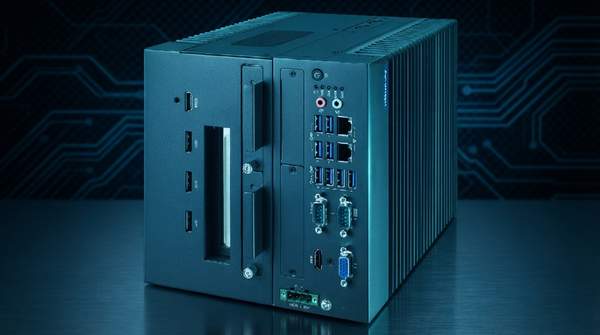
Choosing Between Standard IIoT Gateways and High-Performance Edge Hardware for Industrial AI
Industrial architects must choose between standard IIoT gateways for data pass-through and high-performance edge hardware for real-time AI, based on application needs and latency requirements. The article details how to map application objectives and latency demands to the appropriate edge hardware class for successful industrial AI implementation.

Federated Learning Architectures: How Data Distribution Shapes Privacy-Preserving AI
Federated learning architectures—Horizontal, Vertical, and Federated Transfer Learning—are chosen based on how data overlaps in samples and features between collaborating parties, with secure aggregation and differential privacy ensuring data confidentiality.

Behind the Lens: The Technology Driving Extreme Aerial Productions' Cinematic Drone Footage
This article delves into the elite technology, precision piloting, and cinematic vision that transform basic drone footage into captivating aerial productions, distinguishing professional work from hobbyist attempts. It highlights how companies like Extreme Aerial Productions set the standard for high-stakes artistry.

How Quantum Error Correction Fixes Qubits It Cannot Look At
Quantum computers are prone to errors due to qubit fragility and environmental noise. Quantum Error Correction (QEC) addresses this by encoding information across multiple physical qubits and using indirect measurements to detect and fix errors without disturbing the quantum state.

Synthetic Data for Machine Learning: How Statistical Models, VAEs and GANs Tackle Privacy and Scarcity
Synthetic data offers a solution for machine learning when real data is scarce or sensitive, enabling model training by generating artificial records that mimic real data's statistical properties. The article explores key generation techniques like statistical models, VAEs, and GANs, detailing their trade-offs in privacy, utility, and practical application.

Quantum Machine Learning, Explained: Superposition, Entanglement, and Why the Field Is Still Mostly Theory
Quantum machine learning (QML) offers a fundamentally different approach to data processing by leveraging quantum phenomena like superposition and entanglement in exponentially large mathematical spaces. While theoretically promising exponential speed-ups for specific problems, QML remains largely theoretical due to current hardware limitations and the challenge of identifying genuine, provable quantum advantages.

How AI and Supercomputers Are Teaming Up to Accelerate Science: Fusion, Materials and Forecasting
Artificial intelligence and high-performance computing are converging to accelerate scientific discovery across domains like fusion energy, materials science, and complex system forecasting. This synergy leverages AI's pattern recognition with HPC's scale to compress research timelines and enhance predictive accuracy.

What to Consider Before Buying Tactical Security Systems (With Eagle Security Solutions on the Shortlist)
Choosing the right tactical security system is a critical decision for both individuals and businesses. This guide on what to look for when choosing security services helps clarify the essential factors, from personnel t…

How AI Is Reshaping Fixed Income Trading: A Lifecycle Framework
Artificial intelligence is transforming fixed income trading by augmenting human capabilities across the entire lifecycle, from pre-trade analysis to post-trade analytics. AI handles data-intensive tasks, enhancing decision-making and efficiency while traders focus on complex, judgment-driven strategies.

From Sensor to Work Order: The Architecture of Predictive Maintenance and How to Know If You're Ready for It
Predictive maintenance requires a robust architecture connecting IoT sensors to automated work orders, alongside organizational readiness in data, integration, and security. This article details the system architecture and provides a checklist to assess your organization's preparedness for implementation.

Graph or Crew? Choosing Between Open-Source Agentic AI Frameworks by Architecture
Choosing an open-source agentic AI framework hinges on its underlying architecture, with graph-based and role-based paradigms offering distinct trade-offs. This guide compares LangGraph and CrewAI to help match framework architecture to project requirements for control, flexibility, and development speed.