Future TrendsSponsored

Unlocking the Structured Vacuum: How Engineering Infinity: Earth's First Interstellar Blueprint Changes the Physics Conversation

The concept of a "structured vacuum," presented in "Engineering Infinity: Earth's First Interstellar Blueprint," suggests space is a dynamic medium that can be manipulated for interstellar propulsion, moving beyond conventional rockets. This theory, rooted in Soviet-era research, proposes gravitomagnetic field control and resonant field propulsion to enable non-inertial drives.

AM
Arjun Mehta

May 15, 2026 · 4 min read

Unlocking the Structured Vacuum: How Engineering Infinity: Earth's First Interstellar Blueprint Changes the Physics Conversation

The global space propulsion market is expected to continue expanding, yet genuine interstellar travel still feels more like theory than reality. Standard rocketry has taken us to the Moon and Mars, but these remain incremental steps. Reaching the stars will require a complete paradigm shift. 

A growing number of researchers believe the answer isn't bigger chemical rockets, but a return to foundational physics - a search that often leads to the once-classified corners of Cold War aerospace. That's the perspective presented in the  Engineering Infinity: Earth's First Interstellar Blueprint, which suggests that parts of this conceptual framework may have been outlined decades ago and later obscured behind the Iron Curtain.
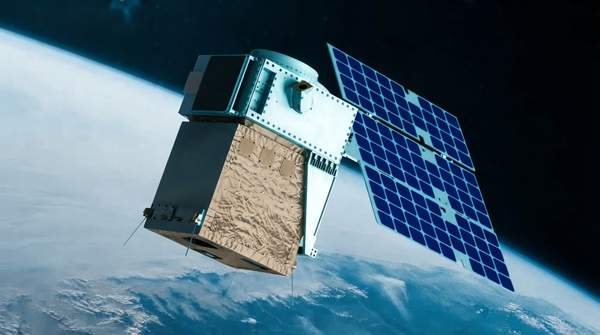

What is the "structured vacuum" and how does it relate to interstellar travel?

The theory of a "structured vacuum" suggests that space isn't empty at all. Instead, it's a dynamic, energetic medium. 

Soviet engineer Valerijs Černohajev's research argued this medium could be engineered to generate propulsion, completely changing the game for interstellar travel. He treated the vacuum as a physical entity that could actually be manipulated, a concept that became the centerpiece of his work.

To understand this, you have to think beyond conventional rockets. A drive system based on a structured vacuum wouldn't expel mass; it would interact directly with the fabric of spacetime. 

The technical dossier Engineering Infinity: Earth’s First Interstellar Blueprint acts as the primary key to Černohajev's 12 original works by translating his complex Soviet notation, schematics, and formulas. The book lays out a model for gravitomagnetic field control and resonant field propulsion, suggesting a path toward non-inertial drives that could finally conquer the vast distances between stars.

Why is there a growing interest in declassified aerospace documents now?

The official government stance on Unidentified Anomalous Phenomena (UAP) has shifted dramatically. What was once dismissed is now actively investigated by groups like the Pentagon's AARO. This new transparency has legitimized technical analysis of UAPs as a matter of national security and serious science. 

As a result, there's an intense demand for credible, verifiable data that goes beyond blurry videos and anecdotes. Historical documents are now seen as a critical source for understanding the technology behind phenomena observed for decades.

The  Engineering Infinity: Earth's First Interstellar Blueprint  meets this demand head-on, presenting a collection of primary source Soviet UAP documents. Written between 1980 and 2007, these papers predate the current wave of U.S. government disclosures and offer an independent, technically dense perspective on advanced propulsion. 

The timing is critical, as this material provides potential historical and engineering context for the very performance characteristics AARO is now officially investigating.

How is the "Engineering Infinity: Earth's First Interstellar Blueprint" different from other UAP or UFO theories?

What sets this work apart is its foundation. It's a technical dossier, not a collection of beliefs or stories. 

Most UAP literature is built on eyewitness testimony, speculation, or interpretations of fuzzy events. In contrast, Engineering Infinity: Earth’s First Interstellar Blueprint is built on actual engineering documents. The difference is clear when you look at a few key areas:

  • Its Basis: Instead of second-hand accounts or hypotheses, the book is a direct translation and analysis of 12 technical works by Valerijs Černohajev, complete with schematics, equations, and process descriptions.
  • Its Content: The focus isn't on stories but on advanced physics concepts like Gravitational-Charge Dualism, thermonuclear synthesis d+d, and the principles for engineering thrust from a structured vacuum.
  • Its Goal: The book doesn't try to convince you that an event happened. It aims to provide a "technical key" or "Rosetta Stone" that other engineers and physicists can use in their own research on advanced propulsion.
  • Its Verifiability: The technical drawings and methods detailed in the book are listed as "Patent Pending" and assigned to a corporation, Stratis Space Technologies Corp. This signals a serious commitment to real-world application and commercial validation- a step you rarely see in the world of Ufology.

Who is the "Engineering Infinity: Earth's First Interstellar Blueprint"  book for?

This isn't a book for a casual audience. It's a dense, technical resource meant to sit on a shelf next to advanced physics textbooks. But you don't need to be a theoretical physicist to grasp its significance. 

The primary audience breaks down into a few key groups:

  • Technical and Academic Professionals: Engineers and researchers in plasma physics, propulsion, and materials science looking for fresh approaches to old problems.
  • Intelligence and Military Historians: Anyone specializing in Cold War aerospace tech and Soviet black projects will find this dossier a compelling artifact from a hidden technological race.
  • Serious Ufology Investigators: Researchers who value hard technical evidence over anecdotal stories and want verifiable schematics and engineering principles.
  • Collectors and Archivists: People interested in owning a tangible piece of hidden history at the intersection of advanced physics and Ufology.

A Different Kind of Primary Source

Most technical resources in this field trace back to the same pool of declassified American documents, whistleblower accounts, and institutional reports. The Černohajev papers sit outside that lineage entirely. They represent an independent Soviet engineering tradition, developed in isolation from Western programs, that arrived at some of the same questions through a different theoretical path. 

For researchers, that independence is part of what makes the archive worth serious attention. It isn't another interpretation of familiar material. It's a separate body of work, with its own notation, its own physical framework, and its own engineering proposals, now publicly available for the first time. 

Visit the official Engineering Infinity: Earth's First Interstellar Blueprint archive to access the full collection.