In the first half of 2025, trade related to artificial intelligence accounted for nearly half of all merchandise trade growth, despite representing only about 15 percent of total trade, according to the Federal Reserve. The surge in AI-related trade reorients global commerce towards the physical components essential for AI development. Much of this increase ties directly to equipment and tools for semiconductor manufacturing, underscoring a tangible industrial shift.
The promise of AI is often framed as an abstract digital revolution. However, its real-world impact manifests as a massive, physical industrial build-out. The massive, physical industrial build-out demands substantial investments in tangible assets, from specialized factories to large-scale data centers, challenging the perception of AI as a purely software-driven advancement.
The global economy now enters an era where digital innovation is inextricably linked to tangible infrastructure. Future economic leadership will hinge on physical investment and strategic supply chain control, suggesting digitally-focused laggards will face significant challenges.

The Industrial Revolution of AI: A Multi-Billion Dollar Transformation
The global AI in manufacturing market was valued at USD 34.18 billion in 2025, signaling immediate industrial expansion. This sector is projected to reach USD 155.04 billion by 2030, according to MarketsandMarkets. Such rapid growth projections confirm the profound retooling of the physical economy driven by AI.
The market expansion transcends mere software development. It mandates substantial capital investment in machinery, automation, and intelligent systems directly integrated into production processes. Companies failing to integrate AI into their physical production processes will face rapid obsolescence in global industrial capacity, as this market transformation accelerates.
Powering the Future: The Data Center Backbone of AI
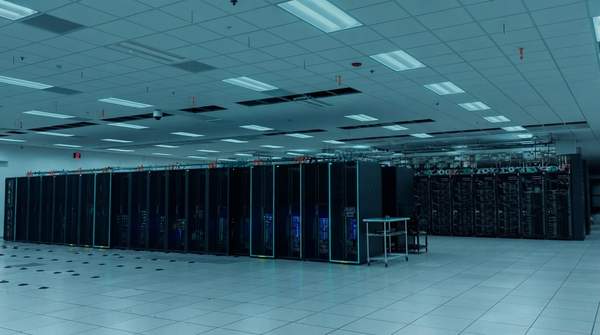
Sustaining AI's exponential growth requires immense and complex physical infrastructure, particularly data centers. Deloitte's analysis of data center capacity, including forecasts extending to 2035, illustrates extensive long-term planning. The extensive long-term planning for data center capacity is foundational for future digital capabilities.
The construction and operation of these facilities demand significant capital investment and resource allocation. They form a critical physical layer supporting all advanced AI applications. The sheer scale of these energy-intensive facilities implies significant environmental and resource management challenges, alongside the capital investment required for increasingly sophisticated AI models and widespread deployment across industries.
The Geopolitical Race for AI Infrastructure and Governance
A global competition for AI infrastructure leadership is underway. The U.S. leads globally in AI infrastructure build-out and planned investments, followed by China, with Europe lagging significantly, according to the Federal Reserve. The disparity in AI infrastructure leadership creates a new geopolitical pecking order where physical capacity dictates future digital influence.
Concurrently, the need for policy and governance across industries is emerging. A study analyzed 160 publicly available policy documents and statements across 14 industry sectors to understand Generative AI (GAI) and Large Language Model (LLM) governance, as reported in Nature. The convergence of tangible asset competition and nascent regulatory frameworks underscores the strategic importance of both physical infrastructure and ethical guidelines in the global AI race.
Nations not actively investing in physical AI infrastructure, particularly semiconductor manufacturing and data centers, risk relegation to digital consumers rather than producers. The strategic imperative for nations to invest in physical AI infrastructure is further amplified by the aggressive lead established by the U.S. and China in AI build-out and planned investments.
AI's Promise: Boosting Productivity and Reshaping Economies
Despite the immediate, capital-intensive build-out, the long-term economic benefits of AI integration are substantial. Generative AI could enable labor productivity growth of 0.1 to 0.6 percent annually through 2040, according to McKinsey. The projected boost in labor productivity validates the immense upfront capital expenditure.
The economic impact of building AI infrastructure appears far more immediate and significant than the long-term productivity gains from AI's operational use. The immediate and significant economic impact implies a massive upfront capital expenditure phase preceding widespread efficiency benefits. AI is positioned as a critical driver for future economic expansion and societal advancement, but this path is paved with physical investment.
The strategic decisions made by national governments and industrial leaders in 2026 regarding physical AI investments, particularly in semiconductor manufacturing and data centers, will likely determine their economic standing for decades, as the AI in manufacturing market alone is projected to reach USD 155.04 billion by 2030, solidifying a new era where digital dominance is predicated on tangible infrastructure.