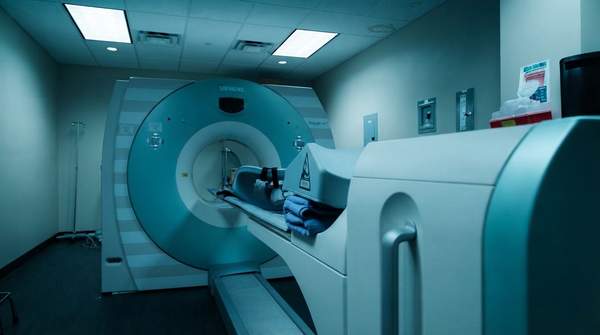
AI systems now interpret mammograms with 99% accuracy, frequently removing the necessity for invasive biopsies, according to Calmu. The 99% diagnostic precision marks a critical advancement in early disease detection, enhancing timely intervention. It significantly reduces patient anxiety and the need for invasive procedures, fundamentally challenging traditional medical protocols and the role of human expert judgment. The 99% diagnostic capability signals a profound shift in healthcare, redefining the boundaries of AI's practical application.
AI is achieving near-perfect accuracy in complex tasks like medical diagnostics. Yet, the ethical and societal frameworks to govern its widespread deployment remain nascent. The disconnect between AI's proven technological capability and society's readiness to embrace it creates a critical vulnerability. Unresolved ethical questions could impede progress or lead to unforeseen consequences.
The immediate benefits of AI in specialized applications will continue to accelerate. However, without proactive ethical and regulatory development, its broader societal integration risks significant unforeseen disruptions. Society faces a critical juncture: either proactively shape AI's deployment or react to its unchecked evolution, risking irreversible consequences.
From Simple Mazes to Complex Cognition: What is AI?
In 1950, Claude Shannon constructed 'Theseus', a remote-controlled mouse designed to navigate a labyrinth and remember its path, according to Our World in Data. The 'Theseus' invention established a foundational concept in machine intelligence: systems capable of learning and adaptation. It laid crucial groundwork for future AI advancements by exploring algorithmic problem-solving.
The pursuit of AI has roots stretching back decades, predating modern computational power. The conceptual leap from a maze-solving mouse in 1950 to AI achieving 99% accuracy in mammogram interpretation by 2026 demonstrates exponential, not linear, progression. The rapid acceleration of AI renders society's current ethical frameworks inherently inadequate for its pace and complex integration. We are attempting to regulate a bullet train with horse-and-buggy rules.
The Leap in Capabilities: AI's Modern Milestones
By 2017, AI systems generated images indistinguishable from photographs, according to Our World in Data. The rapid development in generative AI reflects the exponential growth in machine learning, enabling AI to perform tasks once considered exclusively human. Such progress extends beyond mere recognition to creative output, directly challenging the unique domain of human artistry. The swift advancement in image generation showcases the rapid evolution of AI capabilities. This rapid development in generative AI reflects the exponential growth in machine learning, enabling AI to perform tasks once considered exclusively human. Such progress extends beyond mere recognition to creative output, directly challenging the unique domain of human artistry.
This swift advancement in image generation showcases the rapid evolution of AI capabilities. The speed from rudimentary image generation to near-perfect diagnostic accuracy implies that ethical and societal challenges are not just about present capabilities. They concern a future where AI's next leap will be faster and more impactful, leaving even less time for deliberation on profound societal and moral implications. This trajectory demands proactive governance.
Beyond Benchmarks: AI Surpassing Human Performance
AI systems now consistently outperform humans in handwriting recognition, language understanding, and image recognition tests, according to Our World in Data. AI's widespread outperformance fundamentally shifts how complex cognitive tasks are executed. It challenges traditional human-centric approaches across numerous domains, from intricate data processing to nuanced content moderation, demonstrating AI's broad impact.
AI's consistent outperformance means it has surpassed human capabilities in specific cognitive tasks, proving efficacy beyond theoretical benchmarks. Deploying it in critical areas like medical diagnostics, such as 99% mammogram accuracy, without robust ethical frameworks, prioritizes technical achievement over societal readiness. Companies and healthcare systems rushing to deploy AI for critical tasks without addressing profound ethical deliberations gamble foundational trust. This could erode public confidence and lead to unforeseen societal repercussions.
Addressing the Unseen: Ethical Questions and Societal Shifts
Recent AI advancements have precipitated profound ethical deliberations and societal concerns, according to PMC. The growing debate reveals that powerful technological progress inherently creates new challenges for human values and societal governance. Frameworks must urgently keep pace with AI's rapid evolution to ensure responsible deployment.
What are the key milestones in AI history?
The term "artificial intelligence" was first coined at a Dartmouth College workshop in 1956, marking its formal recognition, according to Tableau. The 1956 Dartmouth College workshop, a foundational moment, was swiftly followed by practical advancements, such as the development of LISP in 1958. LISP, a programming language specifically designed for AI research, significantly facilitated early exploration into symbolic AI, demonstrating an immediate drive to operationalize the nascent field.
How has AI evolved over the decades?
AI's evolution saw a period of reduced funding and interest in the 1970s, known as the "AI Winter," due to computational limitations and over-optimistic projections, according to Coursera. A resurgence in the 1990s and early 2000s, fueled by advances in machine learning algorithms, increased computational power, and large datasets, led to today's sophisticated systems. The shift from symbolic to data-driven approaches highlights AI's cyclical nature of hype and reality. It implies that current advancements, while profound, must be grounded in sustainable development and realistic expectations to avoid another "winter" of public disillusionment.
Navigating the AI Revolution: A Call for Understanding
The paper aims to facilitate the understanding of intelligence and Artificial Intelligence and delve into the transformative impact of the AI revolution on societal norms and ethical frameworks, according to PMC. A deep, interdisciplinary understanding of AI is crucial. This is necessary for responsibly navigating its revolutionary effects on society and ethics, ensuring technological progress aligns with human values.
The rapid advancement of AI, from its early conceptualization to its current near-perfect diagnostic capabilities, demands a commensurate acceleration in ethical and regulatory thought. Without this synchronized development, the immense benefits of AI could be overshadowed by unforeseen consequences, including eroded public trust and widespread job displacement. By Q4 2026, global regulatory bodies like the European Union's AI Act initiative will likely need to advance comprehensive guidelines to address AI's profound impact on critical sectors, particularly healthcare, to maintain public confidence and steer technological progress responsibly.