The Innovation Dispatch
AISoftwareStartupsEmerging Tech
The Innovation Dispatch

Navigating the future through tech and innovation.

AiArtificial IntelligenceEmerging TechTechnologyCloud ComputingDigital TransformationQuantum ComputingAutomation

Sections

  • AI
  • Software
  • Startups
  • Emerging Tech

More

  • Future Trends
  • Tools
  • Data & Automation
  • Industry Insights
  • Writers

About The Innovation Dispatch

The Innovation Dispatch delivers insightful news and analysis on the latest technological advancements and their impact on society. We cover AI, startups, emerging tech, and future trends, providing readers with the knowledge they need to stay ahead in a rapidly changing world.

  • Contact
  • Privacy Policy
  • Terms of Service

© 2026 The Innovation Dispatch. All rights reserved.

  1. Home
  2. /Emerging Tech
  3. /What is Quantum-Resistant Cryptography and Why Does it Matter in 2026?
Emerging Tech

What is Quantum-Resistant Cryptography and Why Does it Matter in 2026?

France's cybersecurity agency, ANSSI, will soon cease certifying security products lacking quantum-resistant encryption.

AM
Arjun Mehta

July 11, 2026 · 3 min read

Futuristic cityscape with digital data streams and abstract quantum entanglement elements, symbolizing the evolution of cybersecurity.

France's cybersecurity agency, ANSSI, will soon cease certifying security products lacking quantum-resistant encryption. This regulatory action, effective by 2026, initiates an immediate global shift in cybersecurity standards, transforming a future security concern into a present-day business barrier for technology providers, according to Reuters. Firms failing to integrate these new encryption methods will face exclusion from critical markets.

While quantum computers capable of breaking current encryption remain nascent, regulatory bodies and leading cloud providers are already mandating and deploying quantum-resistant cryptography. This reclassifies the perceived future threat of quantum computing as an immediate, present-day compliance and security imperative.

Organizations that fail to prioritize this transition risk significant data breaches and regulatory non-compliance. They trade short-term inertia for long-term vulnerability.

The Quantum Threat and NIST's Proactive Response

The U.S. National Institute of Standards and Technology (NIST) has proactively addressed the quantum threat. It selected algorithms like Kyber and Dilithium for standardization in post-quantum cryptography, according to post-quantum security: opportunities and challenges - PMC. This established a robust foundation for encryption resilient to future quantum attacks. NIST has since finalized three core quantum-resistant cryptography standards: FIPS 203, FIPS 204, and FIPS 205, according to Palo Alto Networks. This formalization provides a globally recognized framework, accelerating industry adoption and de-risking implementation for organizations.

Inside the New Quantum-Resistant Algorithms and Hybrid Approaches

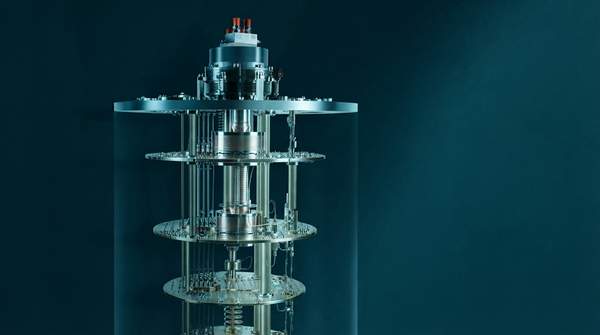
AWS has deployed post-quantum hybrid key establishment, integrating Elliptic Curve Diffie-Hellman (ECDH) with ML-KEM in services such as AWS Key Management (AWS KMS), Amazon S3, and Amazon CloudFront, according to AWS. This dual-layer strategy maintains backward compatibility while enabling a phased transition to quantum-resistant algorithms. Furthermore, AWS KMS and AWS Private CA now support quantum-resistant signatures and roots of trust with ML-DSA. This layered deployment ensures continuous operational integrity during the cryptographic transition, mitigating disruption while enhancing future security.

Industry's Proactive Stance: AWS Leads Global Deployment

AWS is actively deploying new NIST-standardized post-quantum cryptographic algorithms across its services, according to AWS. This includes ML-KEM across all customer-facing service endpoints, supported by client-side SDKs and builder tools. AWS's rapid, comprehensive integration of NIST-standardized PQC effectively mandates the transition for its users, initiating a top-down adoption cycle. Widespread deployment shows that the quantum transition is not a future consideration, but an active, ongoing industry imperative, compelling organizations to adapt or risk falling behind.

The Urgency: Why Organizations Must Act Now

Guidelines recommend transitioning sensitive data away from RSA by 2025, with full adoption of quantum-safe alternatives like Kyber before 2030, according to performance analysis and industry deployment of post- ... arXiv. This aggressive timeline addresses the 'harvest now, decrypt later' threat: data encrypted today, if stolen, could be decrypted by future quantum computers. The finalization of NIST FIPS 203, 204, and 205, alongside AWS's FIPS-140-3-validated AWS-LC library with ML-KEM, provides standardized pathways and readily available tools. Delaying this transition becomes a conscious decision to accept future vulnerability, despite clear solutions.

Common Questions About the Quantum Shift

What is post-quantum cryptography?

Post-quantum cryptography (PQC) comprises algorithms designed to resist attacks from quantum computers. These methods rely on mathematical problems distinct from those underpinning current public-key cryptography, which is vulnerable to quantum algorithms like Shor's.

How will quantum computers affect encryption?

Sufficiently powerful quantum computers could compromise widely used public-key encryption schemes, including RSA and Elliptic Curve Cryptography. This would undermine the confidentiality and integrity of digital communications and stored data, necessitating a transition to quantum-resistant methods.

When will quantum-resistant cryptography be needed?

The precise timeline for quantum computers to pose a widespread threat remains uncertain. However, the need for quantum-resistant cryptography is immediate. This urgency stems from regulatory mandates and the 'harvest now, decrypt later' threat model. AWS-LC, a FIPS-140-3-validated cryptographic library, was the first open-source module to include ML-KEM in its FIPS validation, offering a tangible tool for early adoption.

Given the rapid regulatory and industry adoption, organizations that fail to integrate quantum-resistant cryptography in the next 2-3 years will likely face significant market access restrictions and escalating compliance risks.

Related Coverage from Emerging Tech

  • What is Quantum-Safe Security and Why Does it Matter in 2026?
  • What is quantum-safe security and why does 2026 matter?
  • What Is Quantum-Safe Cryptography and Why Does It Matter for Data Security?
  • What Are Quantum-Safe Cryptography Principles for Digital Assets?

Tags

Quantum ComputingCryptographyCybersecurityEmerging TechAnssiEncryptionFuture Tech
AM

Arjun Mehta

AI Editor

Arjun writes about artificial intelligence and its real-world applications, providing clear and forward-looking analysis.

More from Emerging Tech

Vast, futuristic server farm with glowing AI memory modules, symbolizing SK Hynix's massive investment in artificial intelligence technology.

SK Hynix Secures $26.5 Billion for AI Memory Production Boost

SK Hynix's shares surged 17% on its Nasdaq debut, securing an unprecedented $26.

Arjun Mehta· Jul 11
Federal Reserve officials and venture capitalist Marc Andreessen collaborate on an AI task force to shape future economic policy.

US Federal Reserve Forms AI Task Force for Policy Innovation

Venture capitalist Marc Andreessen, a vocal proponent of technological acceleration, has been tapped by Federal Reserve Chair Kevin Warsh to co-lead a new task force assessing AI's economic impact, ev

Diego Navarro· Jul 10
An engineered Cowpea Mosaic Virus particle being utilized in a high-tech laboratory setting for AI and nanotechnology applications.

How Can We Engineer Plant Viruses for AI and Nanotechnology?

A single Cowpea Mosaic Virus, barely visible under an electron microscope, can be genetically programmed to carry a cancer drug directly to a tumor, bypassing healthy cells.

Arjun Mehta· Jul 10
Abstract representation of agentic AI connecting digital networks and driving customer engagement metrics upwards in a futuristic cityscape.

Agentic AI Sparks Marketing Boom: Customer Engagement Surges

Indian customer engagement software firm MoEngage acquired San Francisco-based startup Aampe, which had grown its annual recurring revenue by 150% over the past year, according to TechCrunch .

Arjun Mehta· Jul 10

Trending Now

1
Story Group's 5 Essential Steps for Building a C-Suite Crisis Communication Plan

Story Group's 5 Essential Steps for Building a C-Suite Crisis Communication Plan

Startups· 9 views
2
Top 5 AI Sports Betting Platforms for 2026 — Manny's Variety Picks Included

Top 5 AI Sports Betting Platforms for 2026 — Manny's Variety Picks Included

Ai· 11 views
3
Historic black and white photo of scientists at the 1956 Dartmouth Workshop, discussing early AI concepts, symbolizing the birth of artificial intelligence.

The Pioneers of Artificial Intelligence: How the Dartmouth Workshop Shaped Modern AI

Ai· 5 views
4
Inside a high-tech fusion reactor chamber, superheated plasma glows intensely, representing a breakthrough in clean energy technology.

South Korea's fusion reactor sustains 180M°F plasma for 48 seconds

Emerging Tech· 5 views
5
A futuristic digital landscape showcasing interconnected data streams and holographic interfaces, symbolizing the leading US AI companies like Microsoft, Alphabet, Amazon, and Meta shaping the technological frontier.

Top 4 Leading AI Companies in the USA to Watch for 2026

Industry Insights· 4 views
6
Abstract visualization of a decentralized data mesh architecture with interconnected nodes and data flows, symbolizing scalability and efficient data management.

What is Data Mesh Architecture and Why It Matters for Scale?

Data Automation· 5 views