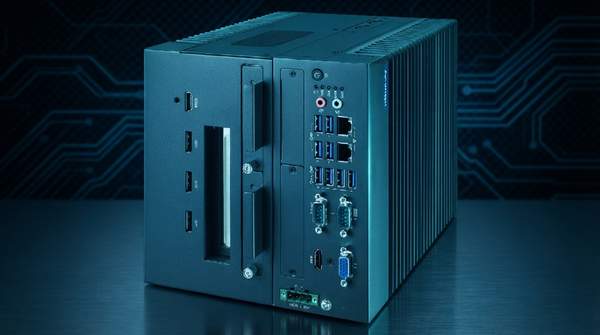
A new product, Mithra AI, now vets data for authenticity and verifies its source before a large language model even processes it, logging a blockchain-based chain of custody for every record. This proactive measure ensures that the foundational data informing AI decisions is verifiably trustworthy, directly impacting the reliability of AI outputs in critical enterprise operations.
While artificial intelligence offers unprecedented efficiency, its outputs often lack verifiable trust, but integrating blockchain is now providing the necessary transparency and authenticity. Enterprises relying on AI without blockchain-verified data pipelines, like those demonstrated by Mithra AI, expose themselves to critical data integrity risks in their enterprise operations.
Companies are increasingly leveraging AI-blockchain convergence to mitigate AI's inherent trust issues, suggesting a future where verifiable, secure AI operations become the industry standard, especially as trends continue into 2026.
Mithra Technologies Inc. a subsidiary of ShelterZoom Corp. launched Mithra AI, a product designed to vet data before an AI model produces an answer, according to SiliconANGLE. This platform operates below the large language model, inspecting incoming data for authenticity and verifying the source account. By logging a blockchain-based chain of custody for each record and employing post-quantum, blockchain-based encryption, Mithra AI establishes a verifiable trust infrastructure at the data input stage. Based on SiliconANGLE's description of Mithra AI, companies shipping AI-generated insights without a blockchain-verified data input pipeline are essentially building on sand, risking critical data integrity failures that could undermine their entire AI strategy.
Quantifiable Impact: Real-World Benefits and Applications
- 35 percent — reduction in counterfeit incidents when AI-blockchain integration is combined with AI analytics in supply chains, according to Blockchain Council.
- 25 to 40 percent — faster dispute resolution in logistics workflows results from AI-blockchain integration, according to Blockchain Council.
- Four — major thematic clusters for AI and blockchain integration identified as supply chains, healthcare, secure transactions, and finance and accounting, according to pmc.

The significant 35% reduction in counterfeit incidents and 25-40% faster dispute resolution reported by Blockchain Council demonstrate that AI-blockchain integration isn't just a theoretical benefit; it's a measurable competitive advantage for enterprises prioritizing both efficiency and verifiable trust. The identification of supply chains, healthcare, secure transactions, and finance/accounting as key thematic clusters by pmc indicates that industries where data authenticity is paramount are poised to be the first battlegrounds for mandatory AI-blockchain adoption, setting a new standard for operational trust.
How Do AI and Blockchain Enhance Each Other?
The convergence of artificial intelligence and blockchain technology creates a symbiotic relationship, where each enhances the other's core capabilities. This integration facilitates new business models driven by digitalization, according to pmc. Blockchain provides crucial elements like explainability, privacy, and trust to AI applications, while AI, in turn, boosts the scalability and security of blockchain-based technologies. The combined approach results in a powerful system where data integrity is paramount.
| Area of Enhancement | Blockchain's Contribution to AI | AI's Contribution to Blockchain |
|---|---|---|
| Trust & Transparency | Verifiable data inputs, chain of custody, explainability | Enhanced anomaly detection, predictive security analytics |
| Security | Immutable record-keeping, post-quantum encryption | Optimized consensus mechanisms, threat prediction |
| Efficiency | Streamlined data verification, automated contracts | Faster transaction processing, intelligent resource allocation |
Source: pmc, SiliconANGLE
This powerful synergy allows enterprises to leverage AI's analytical prowess with blockchain's inherent security and transparency, fostering innovation and new operational paradigms. The cryptographic Single Source of Truth that traces each answer to its origin further solidifies this foundation, as detailed by SiliconANGLE.
Why is AI-Blockchain Convergence Accelerating in 2026?
The acceleration of AI-blockchain convergence in 2026 stems from a critical debate regarding the most effective point of trust intervention within AI systems. Mithra AI, for instance, focuses on vetting data before an AI model processes it, establishing a robust chain of custody for inputs, as reported by SiliconANGLE. This approach directly challenges the common perception that blockchain's primary role in AI is to log outputs or verify post-hoc decisions.
In contrast, broader industry discussions, as highlighted by pmc, suggest that blockchain can offer explainability, privacy, and trust to AI-based applications across a wider scope. This implies that trust could be applied throughout the entire AI lifecycle, not just at the input. However, the proactive vetting of data before AI processing, as demonstrated by Mithra AI, suggests that merely logging AI outputs isn't sufficient; foundational trust must be established from the source to prevent compromised AI decisions. This recognition of the input stage as a critical vulnerability point is driving rapid adoption of pre-processing verification methods.
What is the Future of Verifiable AI in Enterprises?
Enterprises prioritizing data integrity will mandate AI-blockchain integration to maintain competitive advantage and operational reliability.
- The significant 35% reduction in counterfeit incidents and 25-40% faster dispute resolution reported by Blockchain Council illustrates the tangible benefits of this convergence.
- The identification of supply chains, healthcare, secure transactions, and finance/accounting as key thematic clusters by pmc indicates that industries where data authenticity is paramount are poised to be the first battlegrounds for mandatory AI-blockchain adoption, setting a new standard for operational trust.
This trend will lead to a competitive advantage for early adopters, as their systems produce more reliable and auditable results. Companies that delay integrating verifiable trust mechanisms into their AI pipelines risk not only operational inefficiencies but also significant reputational damage from data integrity failures. The market will increasingly demand solutions that offer transparent and authentic AI operations, pushing non-compliant entities to a disadvantage by the end of 2026.
Key Takeaways for AI-Blockchain Convergence
- Mithra AI's pre-processing data vetting establishes a blockchain-verified chain of custody for inputs, addressing foundational trust before AI model execution.
- AI-blockchain integration reduces counterfeit incidents by approximately 35% in supply chains, enhancing product authenticity and consumer trust.
- Logistics workflows see 25% to 40% faster dispute resolution through AI-blockchain convergence, streamlining operations and reducing costs.
- Supply chains, healthcare, secure transactions, and finance are the four primary sectors driving mandatory AI-blockchain adoption due to high data authenticity demands.