The Innovation Dispatch
AISoftwareStartupsEmerging Tech
The Innovation Dispatch

Navigating the future through tech and innovation.

Artificial IntelligenceAiInnovationStartupsVenture CapitalTechnologyEnterprise AiDigital Transformation

Sections

  • AI
  • Software
  • Startups
  • Emerging Tech

More

  • Future Trends
  • Tools
  • Data & Automation
  • Industry Insights
  • Writers

About The Innovation Dispatch

The Innovation Dispatch delivers insightful news and analysis on the latest technological advancements and their impact on society. We cover AI, startups, emerging tech, and future trends, providing readers with the knowledge they need to stay ahead in a rapidly changing world.

  • Contact
  • Privacy Policy
  • Terms of Service

© 2026 The Innovation Dispatch. All rights reserved.

  1. Home
  2. /Software
  3. /FREEDA offers multi-dimensional solution for green software development
Software

FREEDA offers multi-dimensional solution for green software development

Data centers could consume 9% of global electricity by 2030, driven by AI applications, according to PMC .

SL
Sophie Laurent

September 9, 2026 · 3 min read

Futuristic data center with holographic interface showing AI energy consumption and carbon footprint metrics, highlighting green software solutions.

Data centers could consume 9% of global electricity by 2030, driven by AI applications, according to PMC. This escalating consumption poses a significant environmental challenge, increasing the urgency for green software development. AI's rapid expansion dramatically increases global energy consumption. However, innovative software solutions now automatically optimize applications for lower carbon footprints. This creates tension between accelerating AI adoption and environmental responsibility. Companies failing to integrate carbon efficiency risk significant environmental impact and potential regulatory or reputational penalties as green computing becomes a standard operational requirement by 2026.

The Challenge of Holistic Optimization

AI economics must combine business value, engineering efficiency, consumption, and environmental impact, states ET CIO. Enterprises need to scrutinize the economics of individual AI-enabled decisions, moving beyond broad technology programs. Sustainability in AI adoption depends more on linking compute consumption to business value than on greener infrastructure. This strategy risks overlooking broader environmental impact if business justification alone drives high absolute energy use. Achieving sustainable AI requires a sophisticated approach, such as FREEDA's formal constraint-based optimization, to granularly assess combined economic, efficiency, and environmental impact, reports Bioengineer.

Introducing FREEDA's Multi-Dimensional Solution

FREEDA is a new toolchain that automatically reconfigures microservice-based applications across the cloud-edge continuum, balancing failure resilience, response times, and carbon footprint, according to Bioengineer.org. It unifies failure resilience, quality-of-service, cost, and carbon efficiency within a single formal model, integrating environmental impact directly into performance metrics. This distinguishes it from prior optimizers focused on single dimensions. The toolchain operates as a control loop, monitoring conditions and re-solving the deployment problem as circumstances shift.

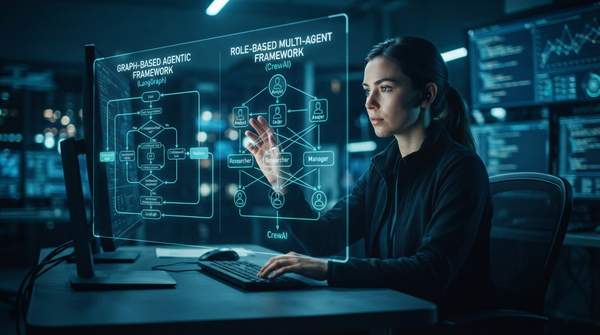
Conditions like fluctuating carbon intensity or node failures trigger re-optimization. Researchers validated FREEDA using an experimental suite in simulated and emulated environments. They subjected applications to stressors like node failures, resource exhaustion, and shifting carbon intensity. This rigorous testing confirmed its effectiveness, making green software development practical and scalable.

The Broader Shift to Carbon-Aware Systems

The emergence of tools like FREEDA confirms a growing industry recognition: environmental impact must become a core consideration in software engineering and system design, moving beyond a peripheral concern. Organizations previously viewed environmental impact as an annual reporting exercise. Now, real-time application economics demand integration of carbon impact, with ET CIO advocating for monthly environmental metrics. Companies continuing with old methods risk being outmaneuvered by competitors.

Failing to adopt real-time, multi-dimensional optimization tools like FREEDA also risks higher operational costs, poor resilience, and accumulating an invisible carbon debt, which will become a critical business liability.

Future-Proofing Software Development

Green software development will redefine best practices across industries. Proactive, automated solutions for environmental sustainability will become standard, requiring organizations to adopt advanced strategies. The traditional separation between 'performance' and 'sustainability' metrics is dissolving. Enterprises must integrate environmental impact into real-time application economics, transforming how technology decisions are made.

As of 2026, FREEDA's developers continue to refine these tools for more granular control over carbon emissions, integrating environmental metrics into core business operations.

Common Questions on Green Software

What are the benefits of green software development?

Green software development reduces operational costs by optimizing resource use and energy consumption. It also improves brand reputation and helps meet increasing regulatory demands for environmental accountability. Organizations can achieve greater system resilience by adapting to fluctuating energy grids.

How can software reduce carbon footprint?

Software can reduce carbon footprint through efficient code, optimized algorithms, and smart resource allocation. Tools like FREEDA automatically reconfigure applications to use less energy, minimizing environmental impact in real-time.

What is carbon-aware computing?

Carbon-aware computing involves designing and operating software systems to minimize their carbon emissions. This means dynamically shifting workloads to regions with lower carbon electricity or during times of peak renewable energy supply. It optimizes energy consumption based on grid carbon intensity.

Tags

Green SoftwareAiData CentersSustainabilitySoftware DevelopmentEnergy EfficiencyCloud ComputingEnvironmental Impact
SL

Sophie Laurent

Software Writer

Sophie Laurent is a Software Writer for The Innovation Dispatch, covering SaaS platforms, cloud computing, and the software tools shaping modern industries. Her writing focuses on translating complex technical details into accessible, actionable insights for professionals.

More from Software

Futuristic cityscape with holographic interfaces and professionals collaborating, representing the integration of AI-powered low-code platforms in business.

Top Low-Code Platforms for Business Needs in 2026

Superblocks' AI builder, Clark, now generates entire applications from plain language using Anthropic's Claude Opus 4.

Sophie Laurent· Sep 9
Abstract visualization of interconnected Kubernetes clusters in a hybrid cloud, representing Karmada's multi-cluster management capabilities for AI.

CNCF Graduates Karmada, Boosting Multi-Cluster Kubernetes Management

On September 7, 2026, the Cloud Native Computing Foundation officially designated Karmada as a graduated project.

Sophie Laurent· Sep 8
A visualization of GPT-6 Astra's advanced AI, showcasing its intelligence and cybersecurity capabilities with glowing neural networks and data streams.

OpenAI Unveils GPT-6 Astra, Boasting Unprecedented Intelligence Capabilities

GPT-6 Astra has achieved a perfect 100% score on the ExploitBench cybersecurity test, demonstrating an unprecedented leap in AI's ability to secure digital systems.

Sophie Laurent· Sep 6
Want to Sell Your Art? Shopify Alternatives Compared for Independent Artists and Creators

Want to Sell Your Art? Shopify Alternatives Compared for Independent Artists and Creators

For independent artists and creators, choosing an e-commerce platform can feel as daunting as a blank canvas. You need a tool that showcases your work without demanding a steep learning curve or a large portion of your s…

Arjun Mehta· Sep 6

Trending Now

1
Nvidia's logo and Hugging Face's logo merging in a futuristic AI landscape, representing a major acquisition in the artificial intelligence sector.

Nvidia buys Hugging Face for $12.93 billion

Software· 16 views
2
Robotic arms and human workers collaborating on advanced AI-powered machinery in a futuristic factory setting, highlighting the surge in AI adoption.

Manufacturing AI Adoption Soars While Investment Trails Behind

Future Trends· 14 views
3
Silhouetted employees in a modern office under imposing AI structures, symbolizing the changing employer-employee dynamic in 2026.

AI's Grip Tightens: Employer-Employee Bonds Tested in 2026 Workforce Shifts

Future Trends· 6 views
4
A modern mini PC with integrated AI acceleration, showcasing Intel Core Ultra processors and NPU technology, displayed at COMPUTEX 2026.

Top AI Mini PC with Intel Core Ultra Processors

Tools· 11 views
5
Abstract visualization of quantum bits and neural network connections, representing the synergy between quantum machine learning and artificial intelligence.

What is Quantum Machine Learning and Where It Enhances AI?

Emerging Tech· 6 views
6
Diverse data scientists collaborating on a holographic AI interface, showcasing the future of artificial intelligence and data science skills.

8 Essential AI Skills Data Scientists Need for 2026

Ai· 7 views