In 2021, a quantum kernel classifier cracked a classification problem built from the discrete logarithm, a task where no efficient classical learner could perform meaningfully better than random guessing, according to Postquantum. Quantum machine learning demonstrated its capacity to tackle problems fundamentally beyond classical reach. While quantum machine learning (QML) has shown exponential performance gains in highly specific, complex tasks, its broad practical superiority over classical methods is not yet established in 2026.
This tension means companies and researchers should strategically invest in QML for problems where classical methods hit fundamental limits, recognizing that widespread, everyday applications are still years away. This approach enables targeted innovation in areas currently deemed unsolvable.
What is Quantum Machine Learning (QML)?
Quantum machine learning (QML) leverages quantum principles like superposition and entanglement to enhance or surpass classical data analytics, according to myadlm. Unlike classical machine learning, which processes data sequentially on conventional hardware, QML seeks to unlock new computational paradigms. Ongoing research, including comparisons of quantum and classical algorithms for time-series data analysis, aims to empirically pinpoint where QML offers tangible advantages, rather than assuming broad superiority, as noted by PMC.
The Fundamental Divide: How QML Differs
The core technical distinctions between quantum and classical machine learning stem from their underlying computational models. Quantum computing processes vast data in parallel, exploring multiple possibilities simultaneously. Quantum computing's parallel processing offers a promising avenue for analyzing complex climate-related time-series data, according to PMC, contrasting sharply with classical bit-based systems. A 2022 Science paper further demonstrated that for specific task families, coherent quantum processing can exponentially reduce the number of required experiments compared to classical analysis, as reported by Nature. A 2022 Science paper indicates QML's potential to redefine data efficiency in complex problem spaces, a capability classical methods inherently lack.

| Feature | Quantum Machine Learning (QML) | Classical Machine Learning (CML) |
|---|---|---|
| Underlying Principles | Leverages quantum mechanics: superposition, entanglement, interference | Leverages classical physics: bits, boolean logic |
| Computational Units | Qubits, which can exist in multiple states simultaneously | Bits, which are either 0 or 1 |
| Data Efficiency | Potential for exponential data efficiency in specific tasks | Requires substantial data for complex pattern recognition |
| Problem Solving Scope | Aims to solve problems intractable for classical methods (e.g. discrete logarithm) | Excels in pattern recognition, prediction, optimization within classical limits |
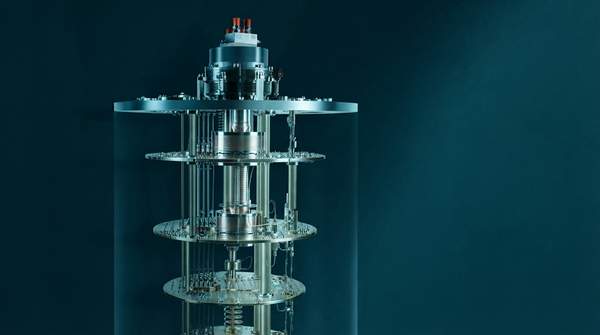
| Hardware Requirements | Quantum computers (e.g. superconducting, photonic systems) | Traditional computers (CPUs, GPUs, TPUs) |
When QML Offers a Distinct Edge
In September 2025, a photonic implementation of quantum-enhanced learning learned a 100-mode bosonic displacement process using approximately 11.8 orders of magnitude fewer samples than a conventional entanglement-free scheme, according to Postquantum. The photonic implementation demonstrates QML's capacity for exponential data efficiency, a critical advantage for limited or extremely complex data. QML excels in handling complex, high-dimensional data, particularly where significant sample reduction or intricate pattern processing is needed, such as in climate data analysis, as noted by PMC. Companies waiting for QML to become a general-purpose replacement for classical AI are missing the immediate opportunity to tackle problems currently deemed unsolvable, like the discrete logarithm problem, which was cracked by quantum kernel classifiers in 2021.
Why Classical ML Remains the Workhorse
Despite its theoretical promise, QML faces significant practical hurdles in data encoding and hardware limitations, making classical ML the pragmatic choice for most current, real-world applications. Early QML efforts, such as using HHL for linear algebra speed-ups, encountered challenges with data encoding and idealized assumptions, as discussed on ArXiv. Early QML efforts led to a strategic shift from general speed-ups to targeted applications where QML offers specific, exponential advantages in data efficiency and problem intractability. This acknowledges current quantum hardware and algorithmic limitations, ensuring classical machine learning remains the dominant force for general-purpose tasks.
Common Questions About QML's Current State
Can quantum computers improve machine learning?
Quantum computers can improve machine learning by offering exponential data efficiency in specific, complex tasks and solving problems intractable for classical methods. Current large-scale benchmarks, comparing five quantum and three classical models across 27 time series prediction tasks, according to iopscience, aim to pinpoint precise scenarios where quantum approaches deliver tangible advantages, rather than general speed-ups.
What are the limitations of classical machine learning?
Classical machine learning reaches fundamental theoretical limits with problems like the discrete logarithm, where its algorithms perform no better than random guessing. While effective for pattern recognition and prediction, its reliance on classical bits restricts efficient processing of high-dimensional, entangled data. This caps its problem-solving capabilities in specific complex domains.
What are the current challenges for widespread QML adoption?
Widespread QML adoption faces significant challenges, including demanding quantum hardware stability and error correction. Data encoding into quantum states remains a complex hurdle, often requiring specific data structures and idealized assumptions. These practical barriers concentrate QML's current impact in niche, high-value areas, not broad AI enhancements.
The Future of Machine Learning: A Hybrid Landscape
The evidence suggests a future where quantum and classical machine learning will complement each other. QML will excel in specific, computationally intensive niches, while classical methods dominate broader applications. QML's disruptive power stems from its proven exponential data efficiency, exemplified by the 11.8 orders of magnitude fewer samples needed for a 100-mode bosonic displacement process, process, fundamentally altering resource requirements for complex learning tasks. If large-scale benchmarks continue to validate these niche gains, early QML adoption will be driven by high-value, intractable problems, not broad AI enhancements. This strategic focus could enable companies like Google and IBM to achieve significant breakthroughs in areas such as advanced materials science and drug discovery by late 2026. For more, see our Quantum Classical ML: The 2026.