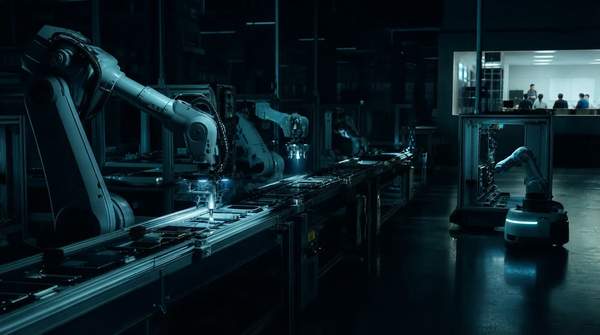
Automation in manufacturing is not simply eliminating jobs; it is restructuring them. The routine, repetitive tasks most exposed to robots and AI—repetitive assembly, basic data entry, routine warehouse operations, predictable scheduling—are giving way to roles such as automation technicians, robotics specialists, mechatronics technicians, AI system supervisors, data analysts, and smart factory managers. What employers want for these positions is a specific, teachable blend of advanced technical skills and distinctly human capabilities like complex problem-solving and collaboration.
The Shifting Landscape of Manufacturing Work
The clearest way to predict whether a task will be automated, according to KentuckianaWorks labor-market analyst Kathleen Bolter, is to ask whether the work is routine or non-routine. Routine work—predictable, repeatable, rule-following—is what machines do well. Non-routine work requiring judgment, interpretation, and physical or cognitive flexibility remains human territory.
Bolter's analysis of advanced manufacturing finds that automation has both positive and negative impacts: it displaces low-skill workers while creating opportunities for high-skill workers, and the production jobs that remain demand more skills than in the past. Her illustration is a factory that installs industrial robots to spray paint its products: the spray painters are displaced, but the new factory creates other jobs, and workers without a college degree are particularly affected as roles are restructured.
Writing for VKS, Virginia Shram reaches a similar conclusion, citing Springer Nature data showing that while certain routine jobs are at risk, demand continues to grow for skilled trades, maintenance technicians, robotics specialists, manufacturing engineers, and problem-solving and leadership roles. The story is transformation, not pure displacement.
Automatable Tasks vs. Emerging Human-Centric Roles in Manufacturing
Setting the declining tasks beside the emerging roles reveals the shape of the shift. In production operations, repetitive manual work is replaced by roles that keep automated systems running. In data and systems management, routine information processing is replaced by roles that interpret what the systems produce. The table below juxtaposes the two sides of that transition.
| Domain of Work | Automatable Tasks | Emerging Human-Centric Roles | Required Skills |
|---|---|---|---|
| Production Operations | Highly repetitive assembly activities and routine warehouse operations, characterized by their predictable, repetitive nature | Robotics specialists, automation technicians, mechatronics technicians, and process engineers who manage, maintain, and optimize automated systems | Operating and maintaining robotic equipment, combined with complex problem-solving and collaboration |
| Data and Systems Management | Basic data entry, repetitive administrative tasks, and predictable scheduling functions—routine processing that AI can handle | AI system supervisors, data analysts, quality and process specialists, and smart factory managers requiring human interpretation, decision-making, and strategic oversight | Data analytics and cybersecurity, complemented by critical thinking and communication |
The pattern across both domains is consistent: the machine takes over execution, while humans move into oversight, maintenance, and analysis. Shoplogix's Tom Sipply describes this as robotics automating routine tasks while simultaneously creating new specialized roles—a symbiotic relationship between humans and machines rather than a substitution of one for the other.
Essential Technical Skills for the Automated Factory
What separates the new roles from the old is a technical layer that did not exist on traditional production lines. PTT's analysis of automated manufacturing hiring identifies mechatronics technicians as workers who bridge mechanical, electrical, and control systems—three domains that previously might have been separate trades. Quality and process specialists, in turn, use production data to keep automated output within specification.
The smart factory manager role, profiled by the Smart Automation Certification Alliance, shows how broad the technical expectations have become. The position spans production, quality, IT, and cybersecurity responsibilities, integrating advanced manufacturing, securing connectivity, and applying data analytics to drive overall equipment effectiveness. The core task is identifying data patterns that can help predict quality issues and directing actions in response.
Deloitte, cited by the same alliance, frames the requirement directly: manufacturing's future work environment is expected to blend advanced technology and digital skills with uniquely human skills to yield the highest level of productivity. Technical proficiency alone is half the equation.
Critical Soft Skills for Human-Robot Collaboration
The other half is what researchers call 21st century skills. Brookings, in its analysis of automation's impact on workers, identifies communication, complex analytical skills that require careful judgments across multiple factors, and creativity as the capabilities workers need to become complementary to AI rather than replaceable by it. The institution argues that displaced workers and those facing lower compensation will need retraining to perform new tasks in new or changing jobs.
Shoplogix's Sipply makes the same point from the factory floor: the future job market will require a blend of technical skills to operate and maintain robotic equipment alongside soft skills to manage change and collaborate effectively with automated systems. In his assessment, adaptability is not just an asset but a necessity, because the human-robot relationship is continuous rather than a one-time transition.
These soft skills are not generic workplace virtues. They are the specific capabilities that remain when execution is automated: deciding what to do when a system behaves unexpectedly, communicating across mechanical, electrical, and IT domains, and exercising judgment where the data is ambiguous.
Career Paths in Automated Manufacturing
For someone entering the field, the evidence points to a recognizable progression. Entry-level technical roles such as automation technician or mechatronics technician serve as foundations, focused on keeping automated systems running. From there, workers can move toward more specialized or supervisory positions—robotics specialist, process engineer, or ultimately smart factory manager, where responsibility expands to system integration, data analysis, and overall factory operations.
Two conditions make this path unusually favorable for new entrants. PTT reports that a large wave of experienced technicians is retiring, creating constant replacement demand, and that employers across the country report these technical roles are among the hardest to fill. The skills are teachable, and the demand is structural rather than cyclical.
Progression, however, is not automatic. Bolter's analysis notes that workers without a college degree are particularly impacted by displacement, and Brookings emphasizes that reskilling or upskilling—on the job or through education—is the mechanism by which displaced workers move into the new tasks. The career path runs through continuous learning.
Navigating the Automated Manufacturing Workforce
To thrive in automated manufacturing, individuals should prioritize developing a blend of advanced technical skills for managing robotic and AI systems, alongside critical soft skills for problem-solving and collaboration. The evidence converges on this dual requirement from every direction: Deloitte's blend of digital and human skills, Brookings' 21st century skills, and Shoplogix's pairing of equipment operation with change management.
The measurable indicator to watch is increased demand for training programs and certifications that integrate both technical proficiency in automation—robotics, data analytics—and human-centric skills such as critical thinking and communication within the manufacturing sector. Brookings already places the onus on schools and employers to provide that emphasis, and PTT's reporting on hard-to-fill technical roles suggests the demand signal is already visible. For the individual reader, the concrete next step is equally checkable: identify which of the two skill categories is weaker, technical or collaborative, and target it directly.
Sources
- What Manufacturing Can Teach Us About How Automation Impacts Jobs — KentuckianaWorks
- Robots Won't Steal Manufacturing Jobs from Humans — VKS
- Robotics in Manufacturing: The Big Impact on Job Roles - shoplogix — Shoplogix | Continuous Improvement Platform for Manufacturers
- How Automation Is Changing Manufacturing Jobs and Creating Better Careers — PTT EDU
- SACA
- Understanding the impact of automation on workers, jobs, and wages — Brookings