Artificial intelligence now touches nearly every stage of cancer care, but its applications are not interchangeable. AI helps researchers find new drug targets, helps clinicians detect tumors in scans, and helps tailor chemotherapy dosing to individual patients—three distinct jobs that rely on related but different techniques. Understanding which application does what is the key to making sense of the field.
Introduction: The Transformative Role of AI in Oncology
Reviews of AI in oncology describe a shift from empirical, trial-and-error approaches toward data-driven ones. A 2025 review in Frontiers in Oncology by Caixia Fang and colleagues frames AI as a thread running through the entire oncology drug lifecycle: it sharpens the identification of drug targets, transforms drug discovery through virtual screening and molecular design, improves patient selection in clinical trials, and enables personalized treatment plans and dynamic dosing strategies tailored to each patient's profile.
That breadth is exactly why the field can feel confusing. "AI in cancer care" can mean a generative model proposing a new molecule, a deep learning algorithm flagging a lesion on a CT scan, or a model predicting whether a specific patient will suffer severe side effects from a chemotherapy regimen. A review in npj Precision Oncology, authored by Jun Li and colleagues, notes that diagnostics—particularly radiology and pathology—account for 80% of AI applications in oncology, with AI algorithms often faster and more accurate than human experts at interpreting complex imaging data from MRIs, CT scans, and X-rays. The remaining applications cluster around discovery, prediction, and treatment planning.
AI in Drug Discovery: Accelerating Innovation
In drug discovery, the goal is speed and precision at the earliest stage: identifying promising targets and designing molecules that act on them. A review of AI-driven innovations in oncology drug discovery describes how machine learning and deep learning are applied across target validation, drug repositioning, de novo drug design, and clinical trial optimization, enabling rapid identification of new compounds with optimized dosages and reduced toxicity.
The concrete techniques include computer-aided drug design, generative AI, and high-throughput screening, alongside molecular modeling and simulation. Researchers at the Kimmel Cancer Center, including Dr. Berger, describe AI analyzing large volumes of genetic data to identify which patients are most likely to benefit from a particular therapy—an approach they expect to yield faster approvals, lower costs, and treatments that reach patients sooner.
Dana-Farber Cancer Institute illustrates the mechanism with a vivid analogy: proteins are "locks" and drugs are "keys." For a drug to work, scientists must find a specific pocket on a protein's surface where a small molecule fits precisely. Dana-Farber reports on an AI tool, AF2BIND, built on AlphaFold2 protein structure prediction, that could speed the discovery of such binding sites—potentially identifying new treatment targets faster, especially for cancers with limited options.
AI in Diagnostic Imaging: Enhancing Early Detection
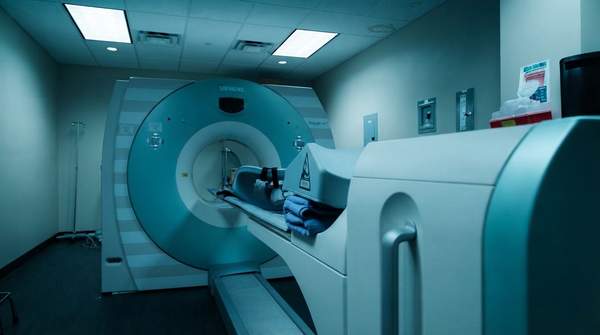
In diagnostics, the goal is earlier and more accurate detection. The npj Precision Oncology review highlights three areas where AI holds particular promise—early cancer diagnosis, therapy, and prediction—spanning cancer incidence, recurrence, and survival. Radiology and imaging are where most AI applications in oncology currently sit.
The techniques here differ from those in discovery. Rather than modeling molecules, diagnostic AI processes pixels and patterns: deep learning, machine learning, and reinforcement learning platforms analyze MRI, CT, and X-ray images to detect cancer at earlier stages and with greater accuracy than manual review alone. The same review emphasizes that these technologies improve diagnostic accuracy while also making it easier to identify therapeutic targets and speed up the development of individualized treatment plans—showing how diagnostics and treatment planning increasingly overlap.
AI for Personalized Treatment: Tailoring Care to the Individual
Personalized treatment is where AI moves from the lab and the scanner to the bedside. A review of AI applications in drug discovery and drug delivery describes how AI has been applied to optimize chemotherapy dosing schedules in cancer treatment. The process works by integrating data from multiple sources—electronic health records, clinical trials, and real-world evidence—to develop personalized treatment regimens.
Crucially, these plans are dynamic: they are updated as new information becomes available, offering what the review calls a more flexible and responsive approach to patient care. Identifying patients most likely to benefit from a specific therapy can reduce the risks of poor clinical outcomes and help lower treatment costs.
The Frontiers review adds a predictive dimension. AI tools enable clinicians to identify high-risk patients before treatment begins, allowing proactive steps such as dose modification or preventive monitoring. If a model predicts a high likelihood of severe myelosuppression—a dangerous drop in blood cell production—from a chemotherapy regimen in a specific patient, the clinician might consider alternative treatments or supportive interventions. Natural language processing also enables real-time monitoring of toxicity from unstructured clinical data such as physician notes and discharge summaries, where many adverse drug reactions are documented.
AI in Oncology: A Comparative Framework
The table below compares the three application areas across a consistent set of attributes—goal, technique, and benefit—so you can distinguish how AI finds new cancer drugs versus how it reads diagnostic images or personalizes a chemotherapy dose.
| Application Area | Primary Goal | AI Technique(s) Used | Key Benefit |
|---|---|---|---|
| Drug Discovery | Accelerate identification of new drug targets and optimize drug design, including finding protein binding pockets | Machine learning and deep learning for target validation, drug repositioning, and de novo design; computer-aided drug design, generative AI, high-throughput screening; molecular modeling and simulation | Gains in efficiency, speed, and decision-making; reduced development costs and faster identification of treatment targets |
| Diagnostics (Imaging) | Earlier cancer detection and improved analysis of medical images | Deep learning, machine learning, and reinforcement learning platforms applied to MRI, CT, and X-ray data | Faster and often more accurate interpretation of complex imaging than human experts alone |
| Personalized Treatment | Optimize treatment regimens and chemotherapy dosing schedules by integrating diverse patient data | Models integrating electronic health records, clinical trials, and real-world evidence; natural language processing for toxicity monitoring | Dynamic, individualized plans that reduce treatment-related harm and support proactive management of adverse effects |
Read side by side, the three roles are complementary rather than competing. Discovery AI compresses the search for candidate drugs; diagnostic AI catches disease earlier and feeds accurate information into the clinical record; treatment AI converts that record into dosing decisions adjusted to the individual. Each answers a different question: what to treat, whether disease is present, and how aggressively to treat it.
Navigating AI in Oncology: A Balanced Perspective
Readers should recognize AI's transformative potential in oncology while critically evaluating its applications, considering the rapid pace of data evolution and potential for bias. The Frontiers review itself cautions that AI systems must contend with data that quickly becomes outdated, along with risks such as hallucinations and automation bias in clinical practice.
This article explains AI applications based on published research; it does not provide medical advice or recommend specific treatments or technologies, and it does not address the regulatory approval status or commercial availability of the tools discussed. The discussion of AI techniques is conceptual rather than technical.
The measurable indicator to watch is ongoing research and professional discussion addressing AI's data currency, potential for hallucinations, and automation bias in clinical practice. As those conversations mature—and as tools like AF2BIND and dosing-optimization models move through validation—the practical question for patients and clinicians will be whether specific AI applications demonstrate better outcomes, not merely faster ones.
Sources
- Frontiers | Artificial intelligence in oncology drug development and management: a precision medicine perspective
- Artificial Intelligence-Driven Innovations in Oncology Drug Discovery — PMC
- Hopkinsmedicine
- The impact of AI on modern oncology from early detection to personalized cancer treatment - npj Precision Oncology — Nature