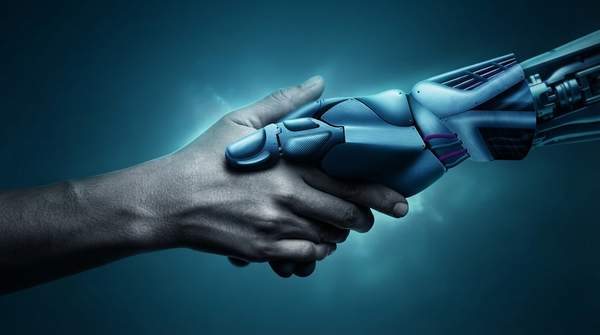
An AI algorithm designed quantum experiments, achieving a solution that had eluded human scientists for weeks, according to the National Academies. This AI-driven feat fundamentally alters the landscape of scientific discovery, pushing beyond human cognitive limits and significantly augmenting creativity.
AI offers extensive capabilities to accelerate scientific discovery and generate novel insights, but its improper application risks stifling the very human creativity it promises to augment. The tension lies in how researchers interact with these powerful tools.
Based on emerging evidence, the most impactful scientific breakthroughs in the coming decades will likely stem from sophisticated human-AI collaboration where AI acts as a dynamic intellectual partner, rather than a mere computational assistant. This approach is essential for fostering innovation in 2026 and beyond.
AI's Unprecedented Capacity to Accelerate Discovery
A deep-learning network, trained on 23,000 examples, accurately predicted which cells would die, the National Academies reports. Such capability reveals AI's strength in discerning subtle patterns across vast datasets, a task often beyond human processing. Moreover, AI generates synthetic storms and identifies new tornado precursors, filling data gaps where real-world events are insufficient, as reported by the National Academies. AI's power to tackle complex scientific problems and generate insights at a speed and scale impossible for humans alone, making it indispensable for data creation when real-world information is scarce.
The Pitfall of Passive Reliance
When researchers ask AI for 'hypotheses to test,' they delegate primary creation, leading to fewer avenues explored, Nature warns. This marks a critical distinction: AI as an exploratory tool versus a definitive answer-provider. Tools meant to accelerate discovery, like foundation models and autonomous experimentation, paradoxically narrow human inquiry if researchers passively query for direct answers. This creates a trade-off between speed and true novelty, ultimately undermining the creativity AI promises to augment.
Beyond Automation: AI as a Creative Catalyst
AI assists researchers in data interaction, experiment design, and result interpretation, FutureTech reports. Specifically, foundation models for science, akin to large language models but trained on domain-specific data, now help researchers generate hypotheses, design experiments, and automate laboratory work, FutureTech states. AI's true value emerges as a collaborative thought partner, expanding human scientists' cognitive horizons. It acts as a creative partner by triggering ideas, visualizing concepts, and exploring information across domains, Nature notes. Its ability to solve complex problems, like designing quantum experiments that eluded humans for weeks, stems from its capacity to guide human thought processes toward novel solutions, catalyzing ingenuity.
Cultivating a Synergistic Future for Science
Asking AI for its reasoning process, rather than direct answers, provides a flexible framework for innovators to fill with their own ideas, Nature suggests. This engagement method fosters more rigorous, creative, and critical thinking in human researchers. Scientific institutions investing in AI must prioritize training researchers on how to strategically engage with AI's reasoning, not just its output. Failing this, teams risk becoming less innovative despite advanced technology, a conclusion supported by Nature's findings on hypothesis generation. Groundbreaking scientific discovery hinges on AI as a sophisticated thought partner, demanding a fundamental shift in how researchers perceive and utilize these powerful tools.
By late 2026, research institutions like the European Organization for Nuclear Research (CERN) will likely see a significant increase in dedicated training programs focused on human-AI collaborative reasoning, aiming to integrate AI more deeply into the experimental design and theoretical exploration phases of their projects.